|
|
As many people who attended my book launch this past weekend in New York will already know, I had on hand a fantastic new publication by architect David Garcia: the Manual of Architectural Possibilities, or M.A.P.  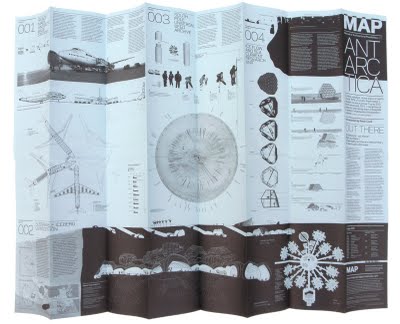 [Images: M.A.P. by David Garcia]. [Images: M.A.P. by David Garcia].I had the pleasure of meeting David back in Sweden earlier this month at the ASAE conference; David's presentation and our subsequent conversation – ranging from the architecture of déjà vu and haunted house novels to the possibility of sonic archives and the work of David Gissen – were more than enough to show that he is pushing forward through some incredibly interesting ideas and is already someone worth keeping an eye on now, not just in the future. He's even just completed a cool children's playground in suburban Denmark. Issue One of M.A.P. – or poster #1, really, as it all unfolds into a double-sided A1 sheet – is about Antarctica. 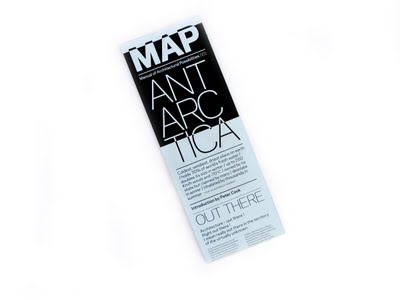 [Image: M.A.P. by David Garcia]. [Image: M.A.P. by David Garcia].Open the poster up and there are habitats excavated directly from the ice, their dimensions and size based on the carving radius of industrial digging machines; there are seed archives entombed throughout the polar glaciers, marked only by GPS; there are abandoned airplanes all hooked together into a grounded megastructure and reused as research labs; there is a catalog of snow crystal geometry; and there is a photo-survey of exploratory housing for visiting scientists. Look for M.A.P. at an architecture bookstore near you, or get in touch with David Garcia Studio directly to order some copies. M.A.P. #2 – which is, incidentally, open for suggestions – will be about "Archives." And future M.A.P.s are impossible not to daydream about: a M.A.P. for prisons, gardens, earthquakes, architecture school, the moon...
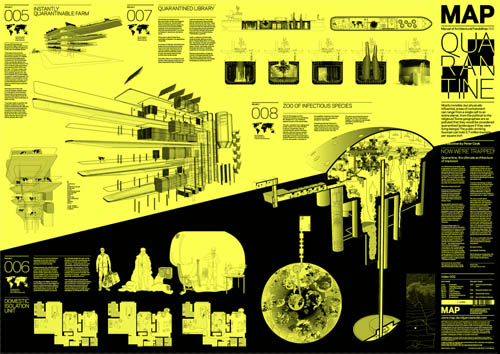 [Image: MAP 002: Quarantine by David Garcia]. [Image: MAP 002: Quarantine by David Garcia].Architect David Garcia's MAP project—the Manual of Architectural Possibilities—has been mentioned here before, which makes me all the more excited to announce that the next issue of MAP will not only be themed around quarantine but it will be on display as an offical part of the Landscapes of Quarantine exhibition opening next month at Storefront for Art and Architecture. This installment, which features Garcia's speculative designs for projects like a "Zoo of Infectious Species," a "Domestic Isolation Unit," and an "Instantly Quarantinable Farm," will also once again include an introductory text by Sir Peter Cook. 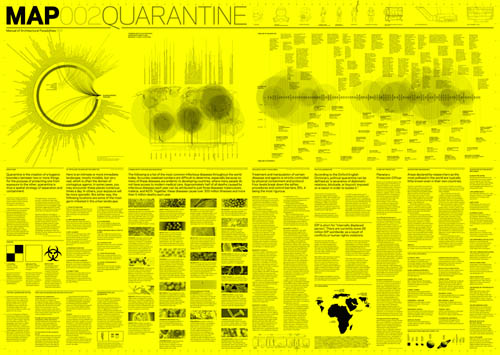 [Image: MAP 002: Quarantine by David Garcia]. [Image: MAP 002: Quarantine by David Garcia].Garcia will in town for Storefront's Landscapes of Quarantine opening party, on Tuesday, March 9, so be sure to come by, buy a copy of MAP 002: Quarantine for yourself, and meet the man in person.
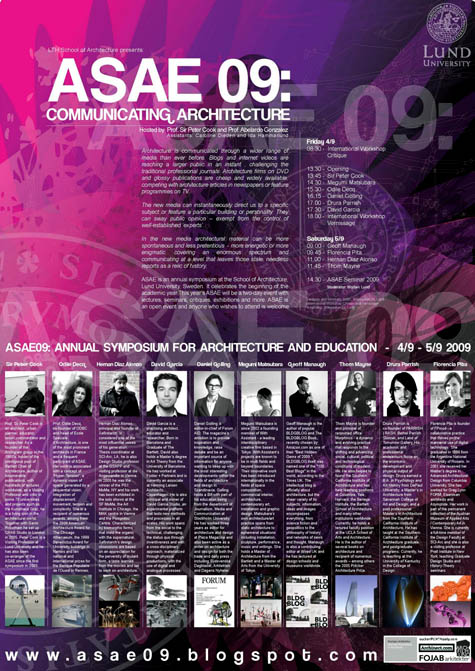 This weekend in Lund, Sweden, Sir Peter Cook and Abelardo Gonzalez will be hosting the 2009 ASAE conference, the theme of which is Communicating Architecture. ASAE is an annual symposium at the School of Architecture, Lund University, Sweden. It celebrates the beginning of the academic year. This year's ASAE will be a two-day event with lectures, seminar, critique, exhibition and more. I'm still pretty stunned to find myself listed as a speaker, alongside people like Thom Mayne, Odile Decq, and Hernan Diaz Alonso; but I'm also excited by the opportunity to bring blogs again into this sort of organized discussion. Unfortunately, I'll be speaking first thing Saturday morning! But I'll be giving a talk called "Optioning Architecture." There will be at least two major themes to be developed: 1) What are the options available to architects when it comes to communicating spatial ideas? Are renderings, plans, and diagrams still the most communicationally effective media to use (from the perspective of the interested public) or simply the most industrially useful (from the perspective of fellow architects and contractors)? What happens when, say, Bernard Tschumi's next building is not announced to the public via well-rendered images and a press release but in the form of a novel? There is also much to discuss here by inverting this scenario and asking: what happens when novelists, screenwriters, poets, and so on begin creating buildings to communicate their literary and narrative ideas, instead of producing texts? While this obviously risks repeating the textualist arguments of an earlier decade, it still seems worth asking what might have happened if James Joyce, for instance, had been a junior architect at KieranTimberlake: what effect might his literary urges have had upon that firm's built output? Put another, slightly cheesy, way: if Mervyn Peake had been a successful architect, what strange and sprawling manor houses might now exist somewhere in the English countryside? In any case, what, in the end, are the communicational options available to architects?  2) What possibilities exist for "optioning architecture," in the sense that a book, short story, or screenplay can be "optioned" by Hollywood for production in another media? That is, what might happen to the world of architectural design if your final graduate thesis project was to be optioned by Steven Spielberg or David Fincher? Would this be similar, in some ways, to the relationship between Rem Koolhaas's co-authored graduate thesis project, "Exodus, or the Voluntary Prisoners of Architecture," and Rupert Thomson's under-appreciated novel Divided Kingdom? To what extent is the latter a novelization of the former? Finally, would it be possible for someone from DreamWorks to come along, see a new museum under construction in Chicago or Baltimore, and then option it, the way he or she might option a promising novel? Could you literally translate the spatial dynamism and implied narrative logics of a building – could you option them – into an act of mainstream cinema? How might such a process work – and is there a reason why this hasn't yet occurred (i.e. it would be a totally ridiculous thing to do)? Of course, there are other types of architectural options that we could discuss here – but I'll be focusing on the two ideas described above. The complete conference line-up includes Florencia Pita, David Garcia, Drura Parrish, Megumi Matsubara, and Daniel Golling. Read more on the conference blog.
Now that Landscapes of Quarantine is up and open for view—and will be until April 17—we're off for a quick vacation. The opening night was amazing; thanks to everyone who came out, to everyone who helped set up, and to everyone whose work appears in the show. Thanks, especially, to Glen Cummings of MTWTF for a fantastic exhibition design, and to Josh Hearn and César Cotta for sticking around all week for 3am vinyl installations, multiple coats of paint, and more. 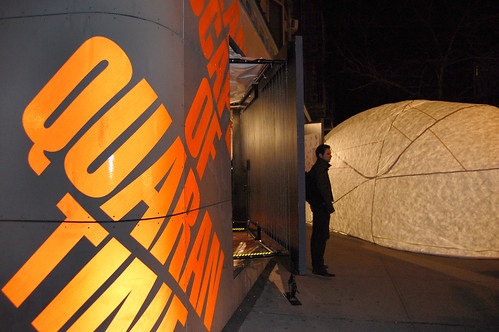 [Image: Outside-in: looking into Brian Slocum's panel installation (left) and Jeffrey Inaba's/C-LAB's temporary sidewalk pavilions, built from Tyvek and blown air, at Storefront for Art and Architecture; photo by Nicola Twilley]. [Image: Outside-in: looking into Brian Slocum's panel installation (left) and Jeffrey Inaba's/C-LAB's temporary sidewalk pavilions, built from Tyvek and blown air, at Storefront for Art and Architecture; photo by Nicola Twilley].I'm obviously biased, as the show's co-curator, but the works on display are awesome. They are: And, for the opening night party only, Suck/Blow, a pair of sidewalk pavilions constructed from Tyvek and pressurized air, by Jeffrey Inaba/ C-LAB with former director of Storefront for Art and Architecture, Joseph Grima. 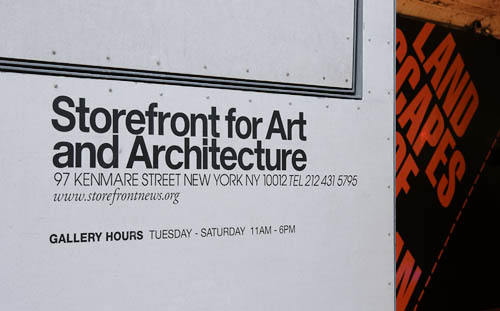 [Image: Photo by Emiliano Granado]. [Image: Photo by Emiliano Granado].The show is already getting some great press, such as these articles and previews in Azure, Dwell, Artinfo.com, Fast Company, and SEED. Pruned, mammoth, dpr-barcelona, and Life Without Buildings have also all added interests of their own. I've included a few photos here, meanwhile, but will be posting more about the show once the next few days of travel are done. I should also briefly add that this is the first post I've ever written while flying in a Wifi-enabled airplane—in this case, over the American midwest—riding through invisible geographies of air, turbulence bobbling us side to side in an experiential, transparent plate tectonics of the sky. 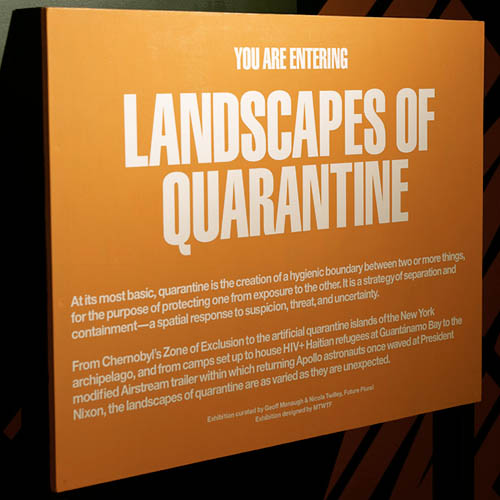 [Image: Photo by Emiliano Granado]. [Image: Photo by Emiliano Granado].So thanks again for coming out for the exhibition opening. Regular posts will resume soon. 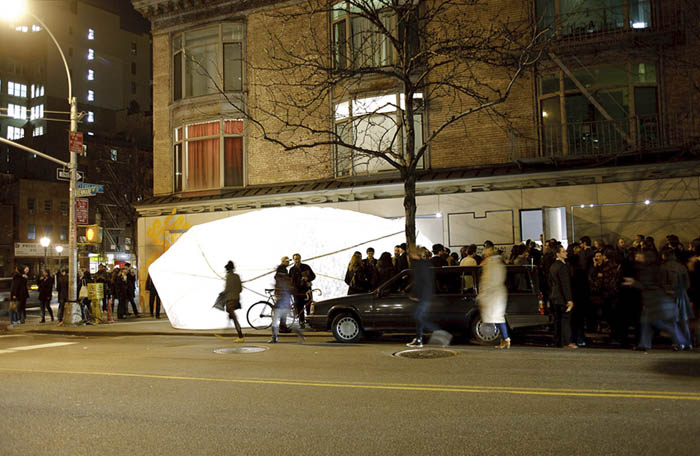 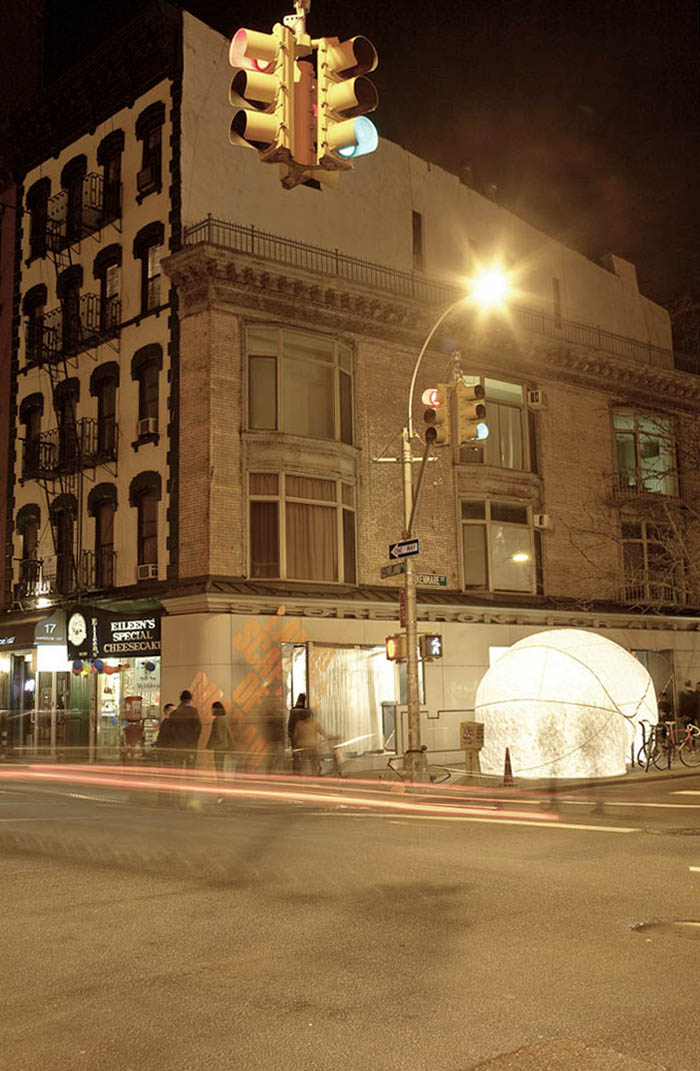 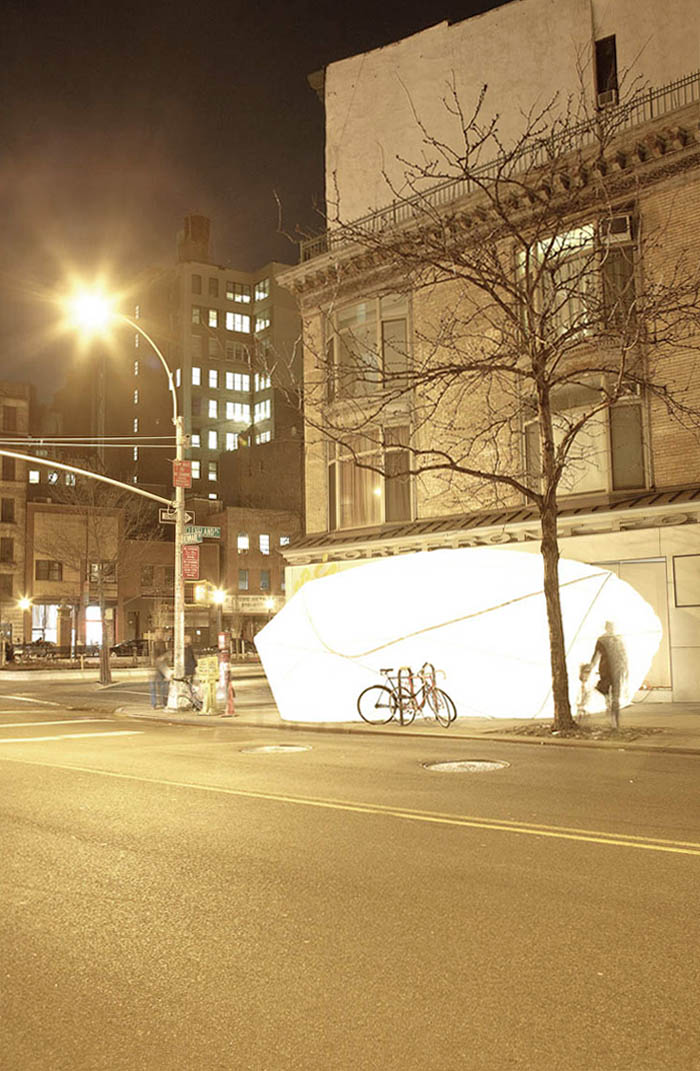 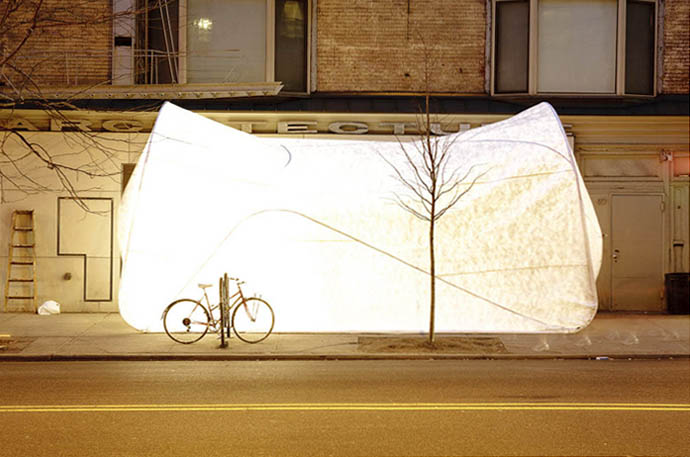 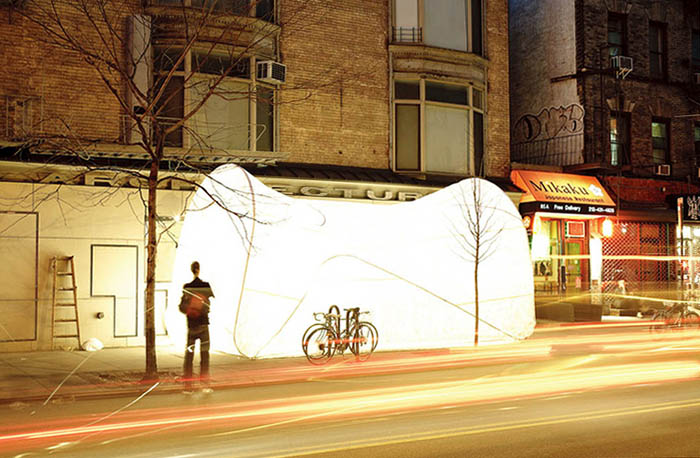 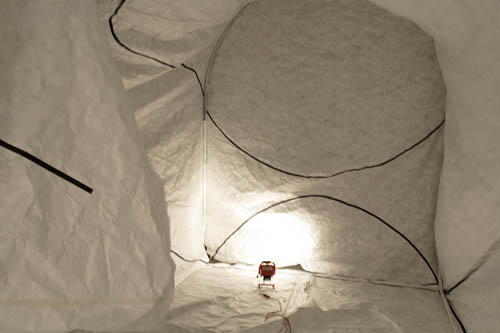 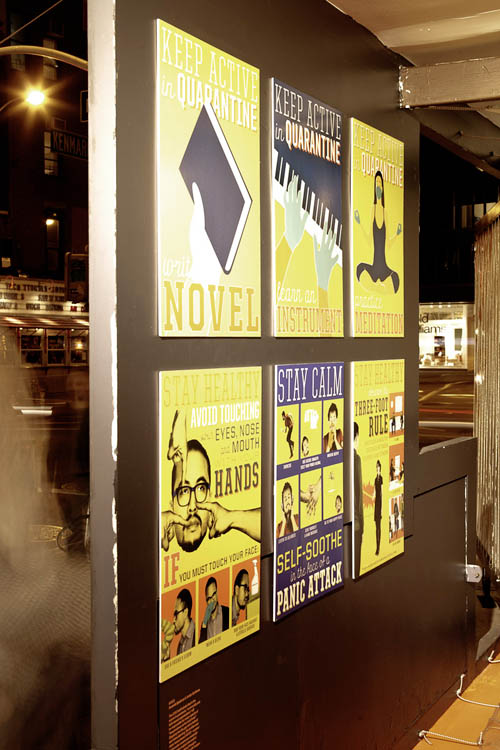 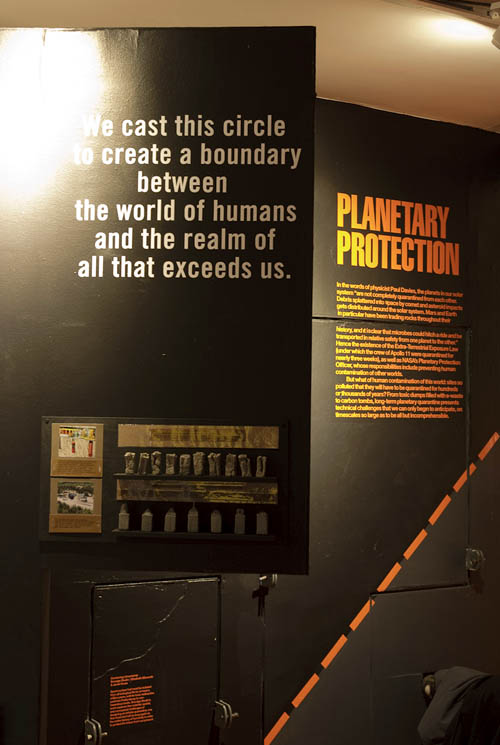 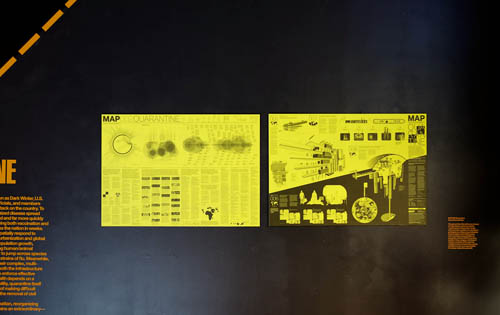 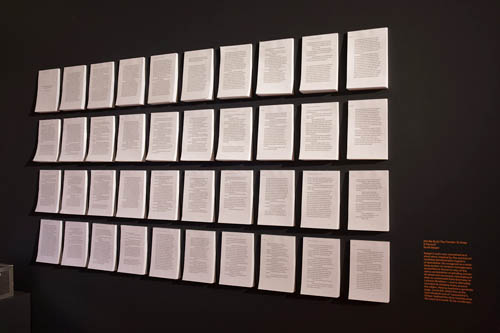 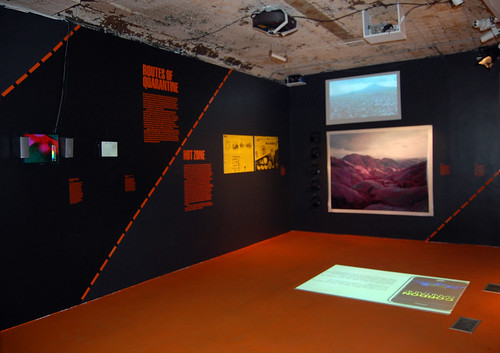 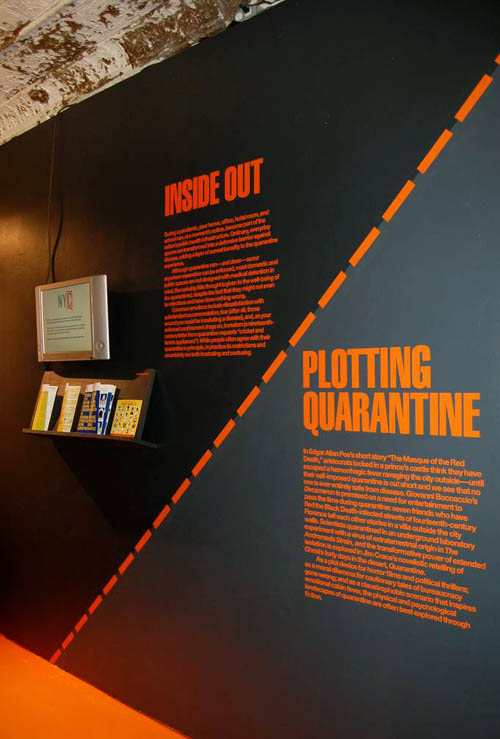 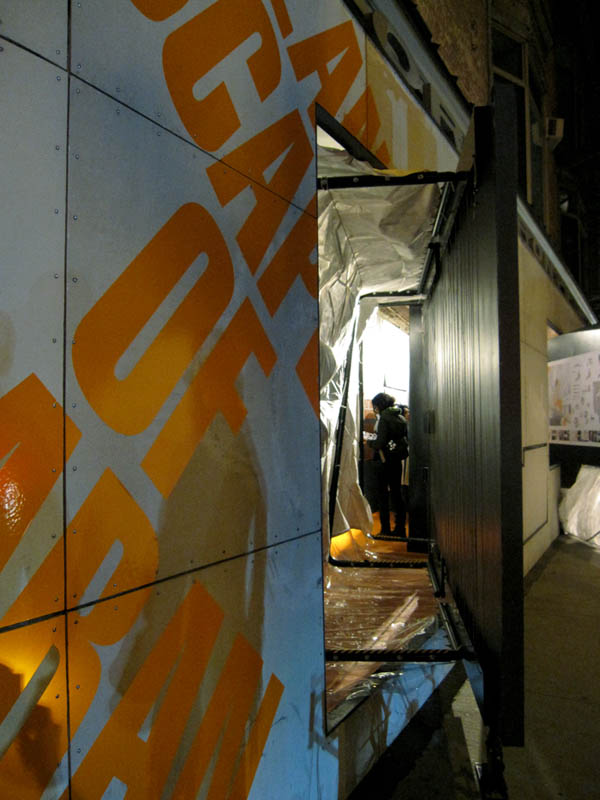 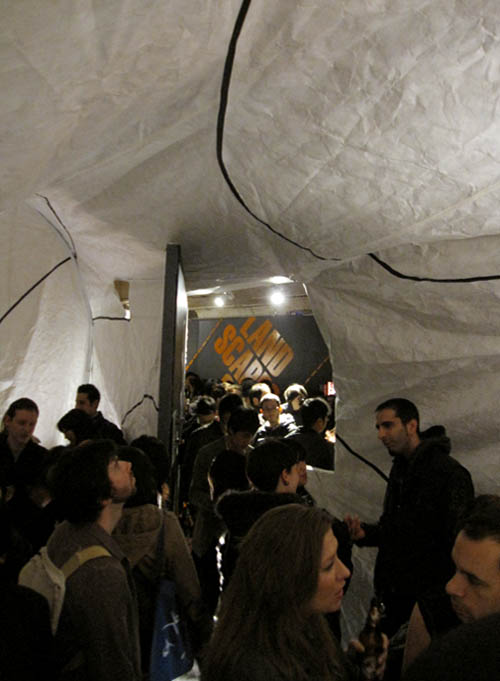 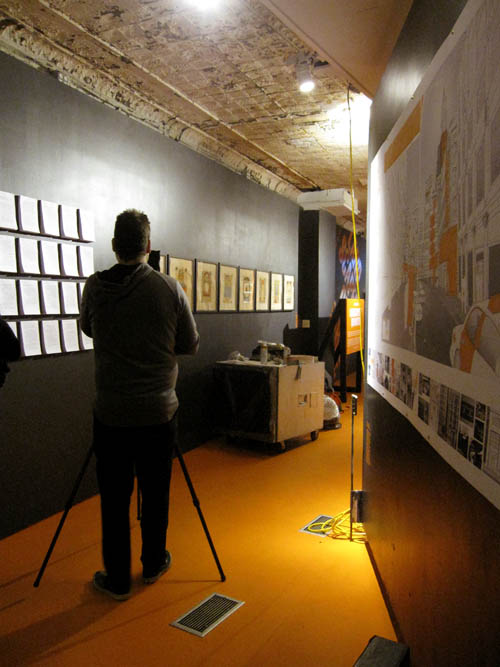 [Images: All photos, except the last five (two of which are by Nicola Twilley and Stacy Fisher), by Emiliano Granado (who appears, with tripod, in the final image)]. [Images: All photos, except the last five (two of which are by Nicola Twilley and Stacy Fisher), by Emiliano Granado (who appears, with tripod, in the final image)].
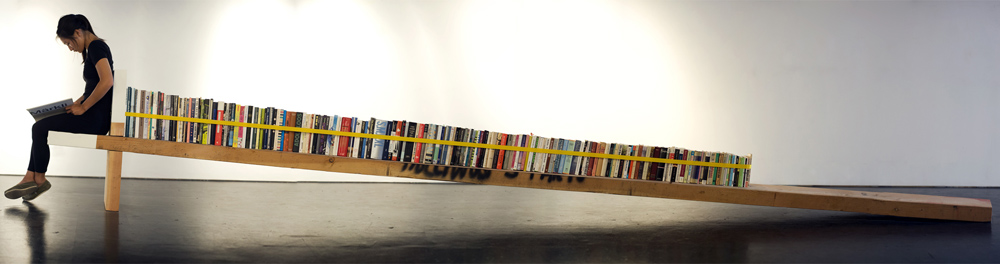 [Image: "Storyboard" by Tim Durfee; photo by Mikey Tnasuttimonkol]. [Image: "Storyboard" by Tim Durfee; photo by Mikey Tnasuttimonkol].Designer Tim Durfee has produced what he calls "Storyboard," a book-storage unit and chair built from a geometrically simple combination of reclaimed pine boards and a 40'-long nylon strap.  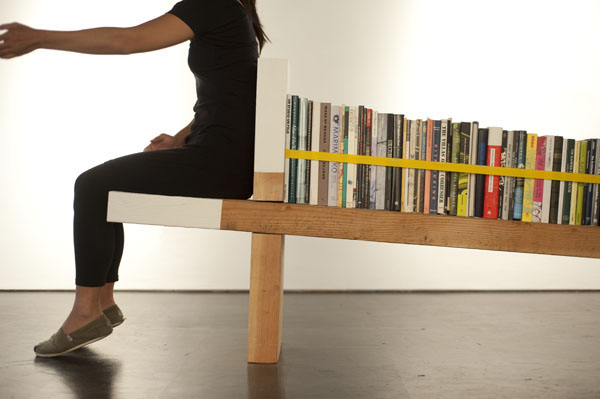 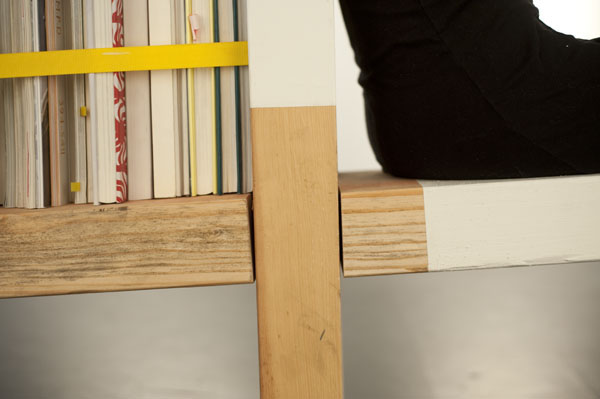 [Images: "Storyboard" by Tim Durfee; photos by Mikey Tnasuttimonkol]. [Images: "Storyboard" by Tim Durfee; photos by Mikey Tnasuttimonkol].It is "an object defined by creating a surface at the height of the knee, at the ideal angle for sitting," Durfee writes. "Similar to the old style of carrying books with a strap, this object can be host to a personal library." Multiple "Storyboards" variously arranged in different spatial combinations would also result in some interesting room designs. As such, it also has some interesting resonances with architect David Garcia's ongoing " Archive" series: inventing new spatial systems for the display, use, and appreciation of books.  [Image: "Storyboard" by Tim Durfee; photo by Mikey Tnasuttimonkol]. [Image: "Storyboard" by Tim Durfee; photo by Mikey Tnasuttimonkol].Durfee's work will be on display at The Page, which opens tomorrow, Thursday, May 20; it is an exhibition sponsored by the LA Forum. Here is a map for how to find it.
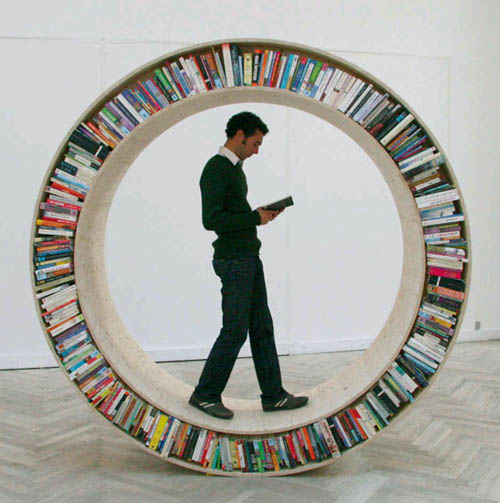 [Image: "Archive II" from the Archive Series by David Garcia Architect, Copenhagen]. [Image: "Archive II" from the Archive Series by David Garcia Architect, Copenhagen].When I started the "Books Received" series last year, I did so just in time to box all my books up, put them in storage for what was supposed to be a three-month trip—and then abandon the series with only two posts written. But now it's May 2010, that "three-month" trip has still not ended (the one-year mark is in two weeks), my things are still out in an L.A. storage warehouse gathering dust, and I've managed to hoard a whole new collection of books and papers. About to hit the road once again now, for a trip within the trip, heading north to spend the summer in Montreal, I thought I'd revive the "Books Received" posts with a look at some of the many, many pieces of reading material that have gathered in our apartment over the past half-year. As before, I have not read all of the following books, which means I cannot vouch for all of their quality (except in a few cases that I will note); also, as before, these are not all new books. They are newly purchased—or newly received as review copies—but they are not necessarily hot off the press. And with that... 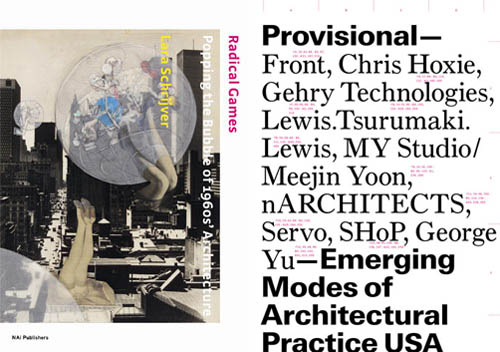 — Radical Games by Lara Schrijver (Netherlands Architecture Institute). Schrijver looks back at the "radical movements" of the 1960s, to "a moment in the history of architecture when revolutionary ideals were paramount and dreams became drawings." Her goal, however, is to uncover how the ideals of three specific groups—Archigram, the Situationists, and Venturi & Scott Brown—maintained a confusing dependency on the very Modernist philosophies they were trying to dispute. This continues to have effects today, Schrijver argues, in muddying the waters of both theoretical debate and experimental practice. — Provisional: Emerging Modes of Architectural Practice USA, edited by Elite Kedan, Jon Dreyfous, and Craig Mutter (Princeton Architectural Press). Speaking of architectural practice, this fantastically designed (by Project Projects) book shows how architects actually work and how their buildings come together, including nARCHITECTS' extraordinary " Wind Shape." A very useful and interesting look at the organizational innovations, technical breakthroughs, and work-flow challenges that architectural offices now face. In fact, if there are forthcoming titles, designed to the same fabulous standard, called Emerging Modes of Architectural Practice Europe, ...Asia, ...Africa, ...South America, and so on, I would snap all of them up. 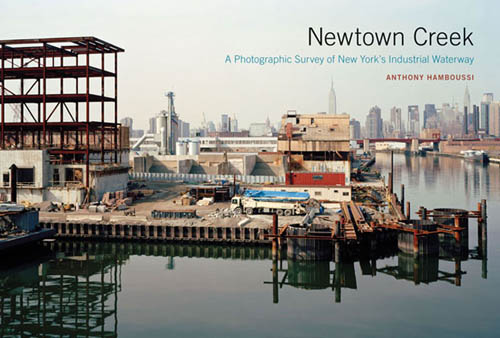 — Newtown Creek: A Photographic Survey of New York's Industrial Waterway by Anthony Hamboussi (Princeton Architectural Press). From gargantuan salt piles to paving yards, UPS loading docks to derelict oil terminals and the sludge tanks of the NY Department of Sanitation, Hamboussi leads a photogeographic tour through the industrial landscapes of Newtown Creek, dividing Brooklyn and Queens. "Having worked along the creek for about a decade," Paul Parkhill writes in the book's afterword, on the other hand, "I can say with some conviction that any assumptions about abandonment are misplaced. Behind the street walls and cyclone fencing, inside the shuttered factories and warehouses, there exists a world hidden to the casual observer. Newtown Creeks reflects, in the words of one waterfront planning official, the 'backyard' of New York City. Desolate in spots, disgusting in others, it is far from abandoned." 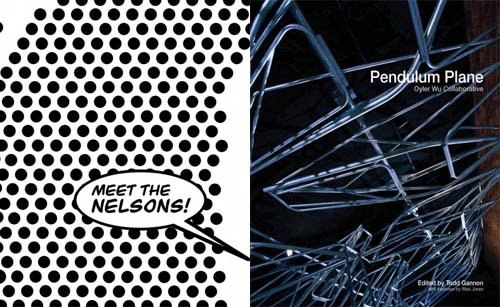 — Meet The Nelsons by Wes Jones and Pendulum Plane by the Oyler Wu Collaborative (Los Angeles Forum for Architecture and Urban Design). These two pamphlets from the LA Forum unfortunately suffer from bad production, with almost instantly cracking spines and pages falling loose within minutes of reading. No matter, the Oyler Wu pamphlet in particular has some fantastic details, including beautiful shots of their Lebbeus Woods-like sketchbooks and some backstage glimpses of the " Live Wire" installation they did for SCI-Arc. 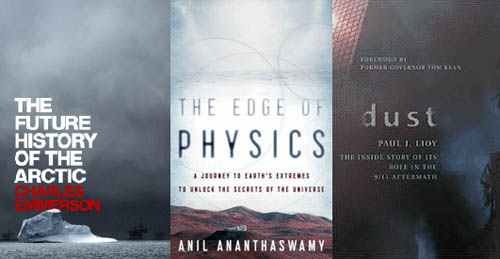 — The Future History of the Arctic by Charles Emmerson (PublicAffairs). Emmerson takes us through the now-rapidly shifting geography north of the Arctic Circle, where nation-state territorial ambitions and private-sector mineral & gas claims—not to mention thawing international shipping lanes, package tourism, and global climate change—are beginning to collide. — The Edge of Physics: A Journey to Earth's Extremes to Unlock the Secrets of the Universe by Anil Ananthaswamy (HMH). I'm halfway through this, and absolutely loving it. There are sensitive, remote, large-scale, and theoretically complex physics experiments going on all over the world, complete with massive pieces of infrastructure that such things require. So why not take a trip around the world and visit these extraordinary sites, as well as the unearthly landscapes in which they sit? Ananthaswamy does exactly that, taking us into an abandoned mine in Minnesota, to a neutrino detector deep beneath Russia's Lake Baikal, up into the mountain deserts of South America, and past hulking telescopes in dark regions all over the world. All travel writing should be this interesting. — Dust: The Inside Story of its Role in the September 11th Aftermath by Paul Lioy (Rowman & Littlefield). In the book's Prologue, Lioy writes that, "Within twenty-four hours of the September 11 attack on the World Trade Center (WTC) in New York City, representatives from several governmental agencies asked me about the dust that was released during the collapse of each tower." The thick gray and fluffy dust seemed to be everywhere, settling on all of the animate and inanimate objects in its path. It covered the skin and clothes of many of those who had survived but who had been trapped in harm's way. You could see it being resuspended in the air after official vehicles drove through Manhattan. What was in that dust and its companion plume of smoke that was moving across Brooklyn and out to sea? At that time, I didn't know the answer to this question. Lioy—a "specialist in exposure science"—has thus written this investigative chemical analysis of the cloud: what was in it, its basic morphology, how it interacted with human tissue, and how long its residue actually stuck around in New York City.  — Poets in a Landscape by Gilbert Highet (New York Review of Books). This brand new, NYRB edition revives Highet's classic textual history of Roman poets, zooming in through the curtain of their words to focus on the background landscapes within which their poetic events took place—revealing a geography of lost place-names, gardens, villages, city fringes, and farms. An earlier edition of Highet's book was praised in an old post on the excellent blog Some landscapes. — Traveling Heroes: In the Epic Age of Homer by Robin Lane Fox (Vintage). This book has been greeted with mixed reviews, but the premise still thrills me: Fox has written a survey of "traveling heroes": "particular Greeks at a particular phase in the ancient world who travelled with mythical stories of gods and heroes in their minds." Or this, from the back cover description: Fox "explores how the intrepid Mediterranean seafarers of eight-century B.C. Greece encountered strange new sights—volcanic mountains, vaporous springs, huge prehistoric bones—and weaved them into the myths of gods, monsters, and heroes that would become the cornerstone of Western civilization." — The Routes of Man: How Roads Are Changing the World and the Way We Live Today by Ted Conover (Knopf). The premise of this book is fantastically simple: to travel the world's roads, to ask how they have shaped human culture, and to reveal their literal resurfacing of the planet. After all, "Roads constitute the largest human-made artifact on earth," Conover writes, so why not approach them as an anthropologist might? The execution so far, however, has left me underwhelmed. At the moment, Conover has just spent an awfully long time writing in a faux-naive voice about the South American jungle, telling us far less about roads, in any real sense, than about his own travels through this remote, intensely rural region that he can't seem adequately to decipher. I'm finding myself wishing that Matthew Coolidge of the Center for Land Use Interpretation had written this book—or that a similarly themed book comes out soon, perhaps by the authors of mammoth—but I hope this sense of anticlimax dissipates as I continue reading. — The Road to Ubar: Finding the Atlantis of the Sands by Nicholas Clapp (Mariner). I picked this up after seeing a brief reference to it in Michael Welland's excellent book Sand. At first, it sounds like total b.s.—a lost city called the "Atlantis of the Sands," known only through rumors and myth, like something published by Weiser. But it turns out to be true: there is a lost trading city beneath the sand dunes of Oman, and the whole thing disappeared when it collapsed into a sinkhole. Read this old New York Times review if you're not convinced; there, we read that Clapp assembled a group of collaborators that included a remote-imaging geologist from J.P.L.; an Arabic-speaking expedition wrangler with a knighthood; a fund-raiser; a cameraman (the personal quest having meanwhile become a film project); a sound man; Clapp's wife, Kay; and Juris Zarins, an archeologist with a special interest in the Arabian incense trade. In 1990, Sultan Qaboos ibn Said granted them access not just to a remote zone of desert but also to one of his helicopters. After some reconnaissance flights, a more laborious search in Land Rovers led the team to a fruitful dig site in the Omani desert—though at an unexpected location, under an unexpected name. Over the next four years, Zarins, with a crew of helpers, would excavate that site tellingly.
To reveal here just what they found, and where they found it, would betray the suspense of Clapp's narrative. Think of it as Indiana Jones meets subterranean desert hydrology. — The First Fossil Hunters: Paleontology in Greek and Roman Times by Adrienne Mayor. (Princeton University Press). What an amazing topic for a book: how did ancient cultures understand, collect, and eventually explain fossils from gigantic creatures that they had no scientific means of understanding? From myths of dragons to fossilized deities, what cultural reactions did these petrified remains inspire? Looking back at the fossil-hunting record of Mediterranean cultures 2000 years ago, Mayor attempts to answer those questions. On another note, Mayor's most recent book, The Poison King, also looks great. 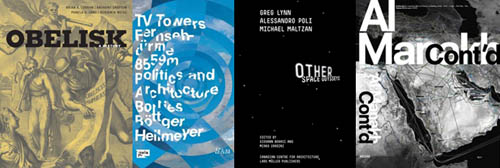 — Obelisk: A History by Brian A. Curran, Anthony Grafton, Pamela O. Long, and Benjamin Weiss (MIT). An illustrated, multiply-authored account of how massive stone plinths were quarried, transported, publicly erected, and culturally adored from Ancient Egypt to Paris in the 21st century. — TV Towers by Friedrich von Borries, Matthias Böttger, and Florian Heilmeyer. This "architectural history of TV towers" tracks the political history and structural forms of television-broadcasting towers all over the world, primarily in Europe—yet, as the authors point out, "the most recent are being erected in up-and-coming Asian cities and in the Middle East." TV towers have been—and still are—the most visible symbols of an otherwise invisible technological revolution. The geographical spread of such towers traces twentieth century political history until this day: rivalry between political systems in East and West was followed by competition among global cities for touristic and economic appeal... TV towers are the cathedrals of a media society. The book was published to coincide with an exhibition at the Deutsches Architekturmuseum that closed in March 2010. — Other Space Odysseys, edited by Mirko Zardini and Giovanna Borasi (Canadian Centre for Architecture/Lars Müller). I'm looking forward to seeing this exhibition in person up in Montreal next month. This pamphlet-sized accompanying booklet does a great job in portraying the loopy design history of architects who have directly engaged with the space program (and, specifically, with human experience on the moon). The Alessandro Poli chapter is a highlight. — Al Manakh 2 (Volume/Archis). A sober, recessionary note, kicked off right away by Rem Koolhaas's introductory letter, haunts this sequel to Al-Manakh. Koolhaas sounds more like a defiant sports fan who knows his favorite team is having an off-season (but who has decided to cheer them on, nonetheless). "Dubai is an experiment that will never be repeated," he writes; it is (was?) "an entirely different construct, the brainchild of a local minority that generously invited manpower and expertise from everywhere to assemble an artificial community, to test, explore and put into practice the relationship between Islam and modernity." Whether or not this massive—and, physically, very nicely realized—book amplifies or eviscerates the "understandable Schadenfreude" Koolhaas mentions in his intro is something I will have to find out while reading it this summer.  — Cyber War: The Next Threat to National Security and What to Do About It by Richard Clarke and Robert Knake (Ecco). This is another book I'm roughly halfway through (and enjoying, precisely because of its alarming nature). If Clarke and Knake are to be believed—and they seem like reliable narrators—the U.S. is wildly underprepared for any sort of concentrated, militarized cyber-attack, whether from another nation-state or from an organized network of criminal hackers. "The U.S. military is no more capable of operating without the Internet than Amazon.com would be," the authors write, and the eye-popping infrastructural vulnerabilities that they point out here and there—such as counterfeit routers, manufactured in China and sold throughout the U.S. market, with security flaws suspiciously (and deliberately?) well-placed for later attacks, or the "logic bombs" that have been found "all over our [the U.S.'s] electric grid"—are worth the price of the book alone. — Constructing a New Agenda for Architecture: 1993 to the Present, edited by A. Krista Sykes (Princeton Architectural Press). This is an historically valuable collection of essays commonly assigned by architecture professors over the past seventeen years—but, to be honest, if you want interesting ideas for future design projects, I think you're better off reading even just a handful of the other titles mentioned above. This is not universally true for everyone reading this blog, of course, and I don't mean to be idiotically dismissive of the past decade and a half of theoretical writing; after all, Sykes has put together an impressive survey. But, for my own needs, impulsive architectural speculation is a much more valuable, projective form of theorizing than the overly careful, citational micropolitics that too often passed for academic work in the 1990s. —Finally, The Other City by Michal Ajvaz (Dalkey Archive). Ajvaz's novel is a "strange and lovely hymn to Prague," we read, falling somewhere between magic realism, Labyrinths, and perhaps Jeff VanderMeer. "Can there really exist a world in such close proximity to our own," Ajvaz asks, "one that seethes with such strange life, one that was possibly here before our own city and yet we know absolutely nothing about it?" That is "indeed quite possible," his narrator concludes, wandering through streets always on the verge of mutating into something else.
In only six days, with a reception on Tuesday, March 9, " Landscapes of Quarantine" opens at New York's Storefront for Art and Architecture. 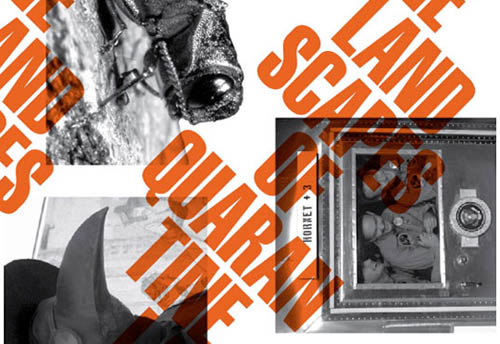 I'm absolutely thrilled to have curated this show, with Nicola Twilley of Edible Geography, and I can't wait to see it finally open for view. On the other hand, this week is an absolute mania of painting, material deliveries, installation, cleaning, and more, which means I'll probably be a bit thin on posts for the next few days. The last four or five months, of course, have seen a wide variety of quarantine-themed interviews and posts here on BLDGBLOG, but it's worth reminding both myself and others why quarantine is worthy of architectural attention in the first place—as a spatial experience of waiting, isolation, and, often, emotional claustrophobia. At its most basic, quarantine is the creation of a hygienic boundary between two or more things, for the purpose of protecting one from exposure to the other. It is a strategy of separation and containment—a spatial response to suspicion, threat, and uncertainty. From Chernobyl’s Zone of Exclusion to the artificial quarantine islands of the New York archipelago, and from camps set up to house HIV+ Haitian refugees at Guantánamo Bay to the modified Airstream trailer within which returning Apollo astronauts once waved at President Nixon, the landscapes of quarantine are as varied as they are unexpected. Each of the works on display in the exhibition responds to some aspect of quarantine, from the "dark math" of triage and the ethical challenge of enforced isolation to the geological timescale of nuclear-waste sequestration. The works range from a wall-sized infographic comparing the infrastructural bubbles inside of which illegally imported orchids and the President of the United States, respectively, live, to a tear-off & take-home short story inspired by the idea of a Quarantine Administration bureaucracy. There are designs for a new, multi-player iPhone game called "Cordon Sanitaire"; field notes and sketches from North Brother Island, the final home of Typhoid Mary; a special issue of David Garcia's Manual of Architectural Possibilities (M.A.P.); and much more. The exhibition will be up until Saturday, April 17—but, if you want even more, there will be a series of ticketed, quarantine-themed dinners in early April. The reception kicks off at 7pm on Tuesday, March 9; it is free and open to the public (and there will be free beer, generously donated by Brooklyn Brewery). I hope to see some of you there! ("Landscapes of Quarantine" poster, flyer, logo, and exhibition was designed by Glen Cummings of MTWTF).
|
|