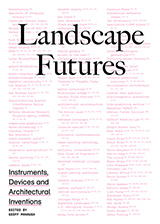
|
|
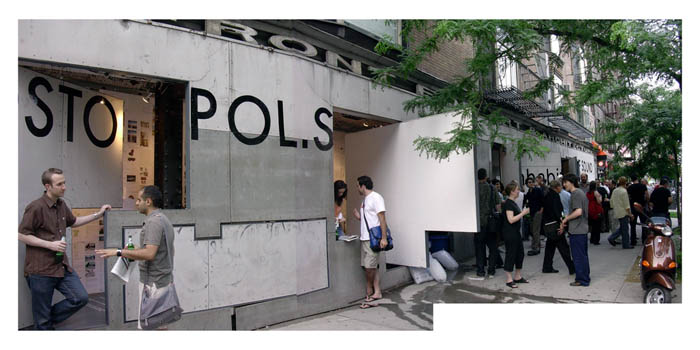 [Image: The Postopolis! closing party kicks off; photo by John Hill of Archidose]. [Image: The Postopolis! closing party kicks off; photo by John Hill of Archidose].
Well, I'm back in Los Angeles, after one of the longest and most surreal days of my life, flying nearly sleepless across mountains and canyonlands mere hours after saying goodbye to everyone at the Storefront, leaving New York before the music had ended, as the print-outs of our blogs were literally blowing off the walls and whole tubs' worth of ice – emptied of at least three hundred beer bottles within minutes – melted into rivers across the sidewalk, and before it even seemed possible that Postopolis! had really come to an end – but there it was: the whole thing was over, already something from yesterday, and now last week, and so I'm in Los Angeles again with no real proof that it ever happened, except for some bookmarks and some photos and some business cards I picked up along the way and this almost painfully happy nostalgia for every aspect of it, feeling more like a ghost who invisibly revisited the east coast, passing through the neutron star of New York City, Manhattan, a now artificial island so dense with structure that it bends the lives of those around it; but there we all were for a week, hanging out and talking about space, time, and architecture in the sweat and heat together.
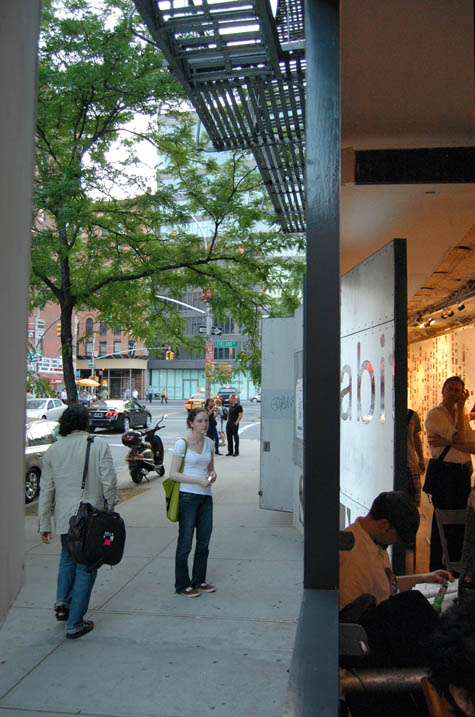 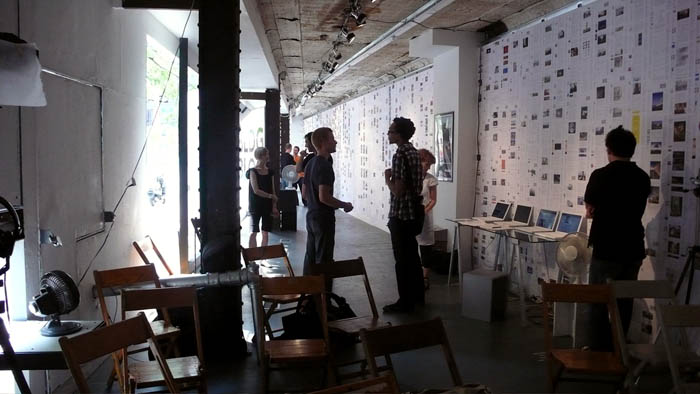 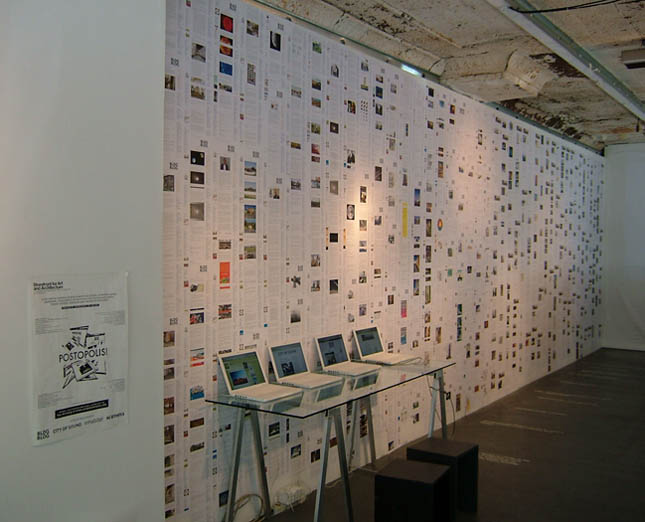 [Images: The Storefront for Art and Architecture; photos, top to bottom, by Nicola Twilley, Dan Hill, and BLDGBLOG]. [Images: The Storefront for Art and Architecture; photos, top to bottom, by Nicola Twilley, Dan Hill, and BLDGBLOG].
And it was a blast.
All of which means I'll start posting again here, about Postopolis! itself – and the speakers who came through, and the city, and the people I met, and the weather systems that pass through Manhattan seemingly detached from the planet – and about regular old architectural news, from the private skyscraper of a man in India to the Italian fate of urban rubbish, soon enough.
But I just want to say a huge thanks, first of all, to my fellow Postopolitans: Dan Hill of City of Sound, Jill Fehrenbacher of Inhabitat, and Bryan Finoki of Subtopia – I already miss you! How strange to spend nearly nine hours a day with someone, for an entire week, only to leap onto an airplane... and wonder if you'll ever see them again.
All the more reason to host Postopolis! 2 next year.
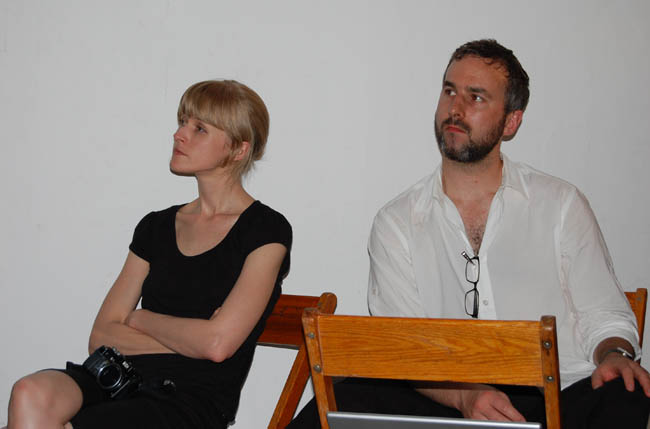 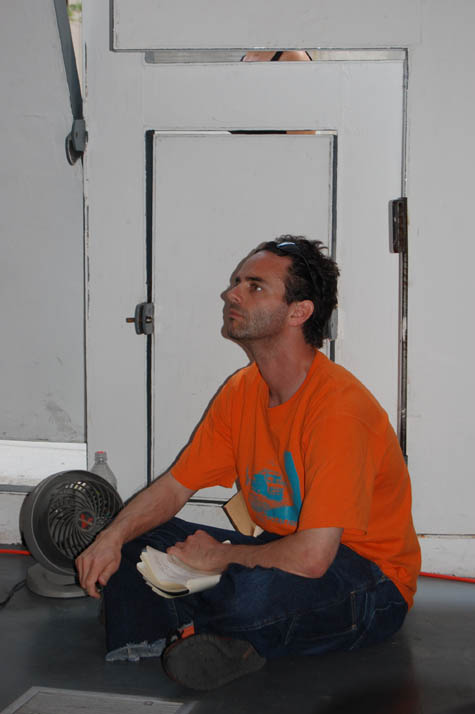 [Images: (top) Jill Fehrenbacher and Dan Hill watch one of the speakers; (bottom) Bryan Finoki cools off by a fan. Photos by Nicola Twilley]. [Images: (top) Jill Fehrenbacher and Dan Hill watch one of the speakers; (bottom) Bryan Finoki cools off by a fan. Photos by Nicola Twilley].
But I also owe a huge thanks to the staff of the Storefront for being there, and for setting up the place, and for slapping our logos onto the facade, and for finding us all a place to stay (more about our hotel soon – specifically the plumbing).
To my wife for the help, for the photos, and for putting up with my jangly nerves.
To everyone who attended – the audience was at least half the point of putting this thing together, and your questions, comments, complaints, flashing photo bulbs, and laughter were a huge inspiration.
To DJ /rupture and N-RON for vibrating all of southern Manhattan Saturday night with giant triangular slabs of bass blasting out and downward from the Storefront on Kenmare Street.
To all our speakers, for coming out in 1000% humidity to deliver un-air-conditioned speeches through sometimes squealing microphones as dumptrucks rattled by blowing air horns – the event would literally have been nothing without your participation! It was also great to meet so many people with whom I've been in email contact for months, if not years, and to realize that all those people out there on the internet, sending you things, are real: you can shake their hand, and have a glass of wine with them, and laugh.
And, of course, most of all, I owe a gigantic thanks to Joseph Grima, Director of the Storefront for Art and Architecture, who came up with the idea for Postopolis! in the first place; who invited me and everyone else out there to New York City to attend; who made all the ends meet administratively, spatially, technically, and financially; and who put up with the goofy, adolescent nervousness I know at least I personally experienced several times each day.
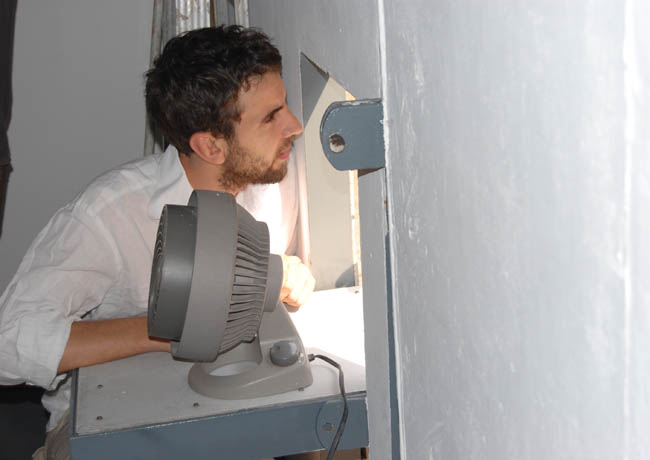 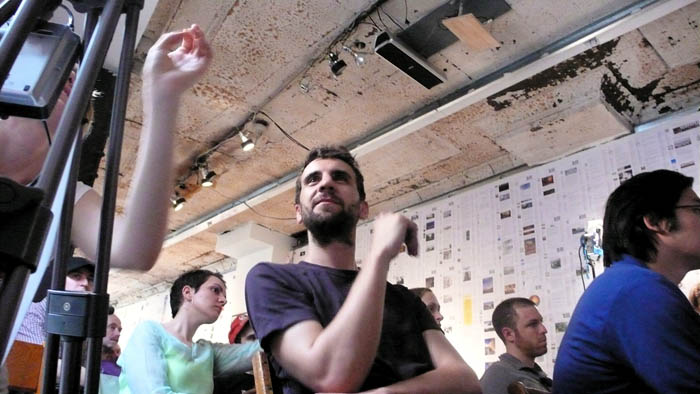 [Images: (top) Joseph Grima peers out through the facade of the Storefront for Art and Architecture (photo by Nicola Twilley); (bottom) Joseph Grima, photographed by Dan Hill]. [Images: (top) Joseph Grima peers out through the facade of the Storefront for Art and Architecture (photo by Nicola Twilley); (bottom) Joseph Grima, photographed by Dan Hill].
Thank you, Joseph!
Finally, thanks to the BLDGBLOG readers who didn't really care about Postopolis! and who don't live anywhere near Manhattan, yet who sat through all these more or less content-less updates while the event spun on. Regular posts will continue shortly.
More soon – but, seriously, thanks again to everybody involved with Postopolis!
I had a sleepless and amazing time, and I already miss everything.
But now I'm home.
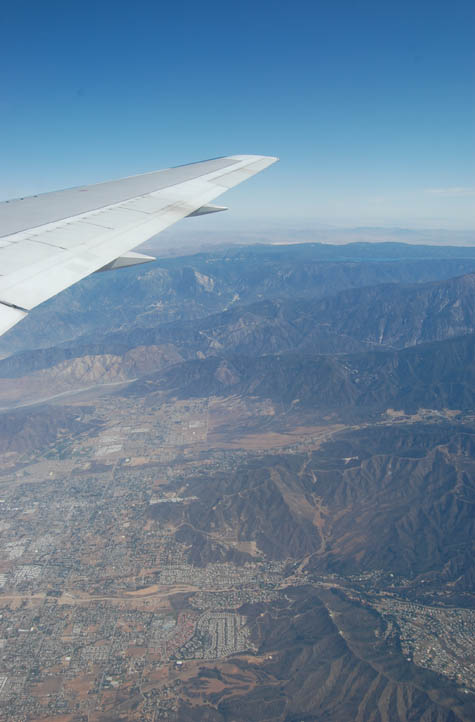 [Image: Looking down at the desert of greater Los Angeles, with Postopolis! already far too far behind us; photo by Nicola Twilley].
(PS: If you're looking for more photos and some video feeds of the event, don't miss all the stuff up on YouTube or BLDGBLOG's Postopolis! Flickr set and the public Postopolis! Flickr pool). [Image: Looking down at the desert of greater Los Angeles, with Postopolis! already far too far behind us; photo by Nicola Twilley].
(PS: If you're looking for more photos and some video feeds of the event, don't miss all the stuff up on YouTube or BLDGBLOG's Postopolis! Flickr set and the public Postopolis! Flickr pool).
It still feels like Postopolis! only just happened, though it's been nearly two years. We've all moved on to new cities or we've had kids; books have been written; jobs have changed; the United States has a new president; the landscape of architecture and design websites continues to mutate, and... we've thus decided that it's time to do another one. And we're doing it in Los Angeles.  [Image: Logo by Joe Alterio]. [Image: Logo by Joe Alterio].From Tuesday, March 31, to Saturday, April 4, 2009, from 5-11pm each day, in a location to be confirmed very soon, we're bringing art, architecture, music, film, design, planning, politics, sci-fi, special effects, geology, history, lost rivers, futurism, and archaeology to Los Angeles, that city of tar pits and movie stars, of beaches, landslides, and mountain lion attacks, of universities and parking lots, of real estate speculation and individualized automotive fractality, city of black magic, mass murder, and abandoned swimming pools, military simulation labs, Die Hard and plate tectonics. City of the Center for Land Use Interpretation, of ecologies, gravel pits, and infrastructure. So who's involved? The first Postopolis! was hosted in the uniquely awesome perforated space of the Storefront for Art and Architecture; it was a collaboration between Inhabitat, Subtopia, City of Sound, and BLDGBLOG; and it was an exhilarating and exhausting five days' worth of back-to-back interviews, presentations, lectures, panel discussions, slideshows, short film screenings, roundtable discussions, slightly surreal international phone calls, and so on. This time it will be all that plus more art, film, and music, a larger international scope, hopefully several Spanish-language events and lectures, hopefully at least one minor earthquake, and just a short drive west to views of the Pacific Ocean. We'll be announcing the actual speakers and all other subsidiary events soon; for now, check out the Postopolis! LA page over at the Storefront for Art and Architecture, bookmark the other blogs involved in planning all this, and watch out for more info coming soon! And each night will be free and open to the public, and all indications are that this thing will be as centrally located as something can be in Los Angeles. So come by at any point: from 5pm to 11pm each night. Postopolis! LA is sponsored by the Storefront for Art and Architecture and ForYourArt, and it will be part of Los Angeles Art Weekend.
Before his talk last week at Postopolis! LA, Matthew Coolidge, director of the Center for Land Use Interpretation, joked that someday he should bring a laser pointer up there to the roof deck and give a new lecture, pointing out specific offices visible around us in the nighttime sky. That afterhours galaxy of Xerox machines and elevator shafts, paper-covered desks and meeting halls, would all be explained, room by room, from the artificially grassed crown of the Standard Hotel. And though both of us laughed, I think it's an amazing idea. 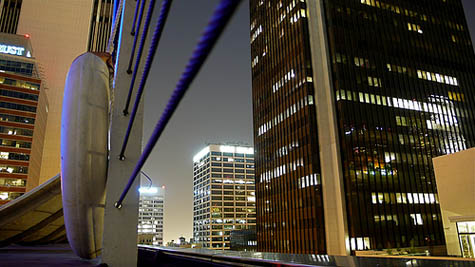 [Image: The view from Postopolis! LA; photo by Dan Hill]. [Image: The view from Postopolis! LA; photo by Dan Hill].Standing up there in the darkness, looking at bank towers and real estate investment firms, individual offices lit from within (and even whole hallways, stretching horizontally into the sky before disappearing into themselves through a trick of perspective), the 16th, 17th, and much-higher stories of the city all visible to us like an architectural section, you could narrate a kind of local micro-history of nighttime spaces in LA. It wouldn't be giving a lecture so much as becoming a planetarium. "In that building over there," Coolidge might say, pointing his laser at a window four blocks distant, "the man who invented Technicolor once worked; and in that office over there" – pointing yet further, to One Wilshire, visible from the pool side of the building – "the internet traffic through which you're able to write this post passes everyday." And so on. The woman who first dreamt up and mapped the flight paths of intercontinental passenger airplanes over LAX once ran a property law services firm in that office, just barely visible with a laser pointer down there. 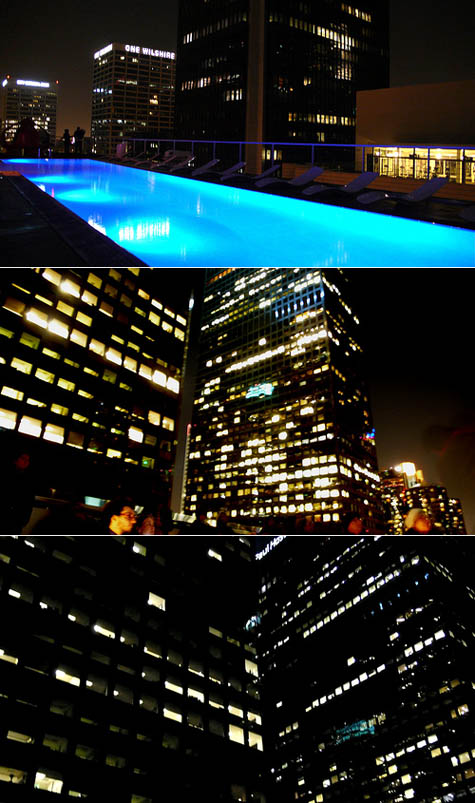 [Images: The artificial astronomy of downtown Los Angeles, as seen during Postopolis! LA; photographed by Dan Hill]. [Images: The artificial astronomy of downtown Los Angeles, as seen during Postopolis! LA; photographed by Dan Hill].Or perhaps it could be a new form of immersive storytelling: local novelists stop by every third Friday of the summer months and, in the darkness, using laser pointers, they invent family dramas, murder mysteries, political thrillers, and end-of-the-world catastrophes, all the while pointing to specific rooms and halls within which the action takes place – even the specific computer monitor, visible in someone's unblinded window, where plot-defining government secrets are thought to be stored... Alternative fictions of the city. In a way, I'm reminded of the brilliant Access Restricted program, curated by the Lower Manhattan Cultural Council (the final edition of which is April 28). Access Restricted is a "free nomadic lecture series that opens rarely visited and often prohibited spaces in Lower Manhattan to the general public" – meaning that certain offices, lobbies, meeting rooms, and even whole buildings directly relevant to the lecture taking place inside them are temporarily opened up for public visitation. But imagine a rooftop version to this, a kind of Rooftops Restricted: you take a roof somewhere in midtown Manhattan and you give it to Paul Auster for the night, with a microphone in one hand and a laser pointer in the other, with 10 or 15 people camped out in sweaters all around him. Next week, it's Jonathan Lethem; the week after that, Joseph O'Neill. You generate a new ad hoc literature for the city, a narrative planetarium that radiates stories outward from the rooftops into the city.
Well, I'm off for New York City this weekend for Postopolis! – but there's a whole lot of news to announce in the meantime, including some new speakers and a relatively up-to-date schedule. 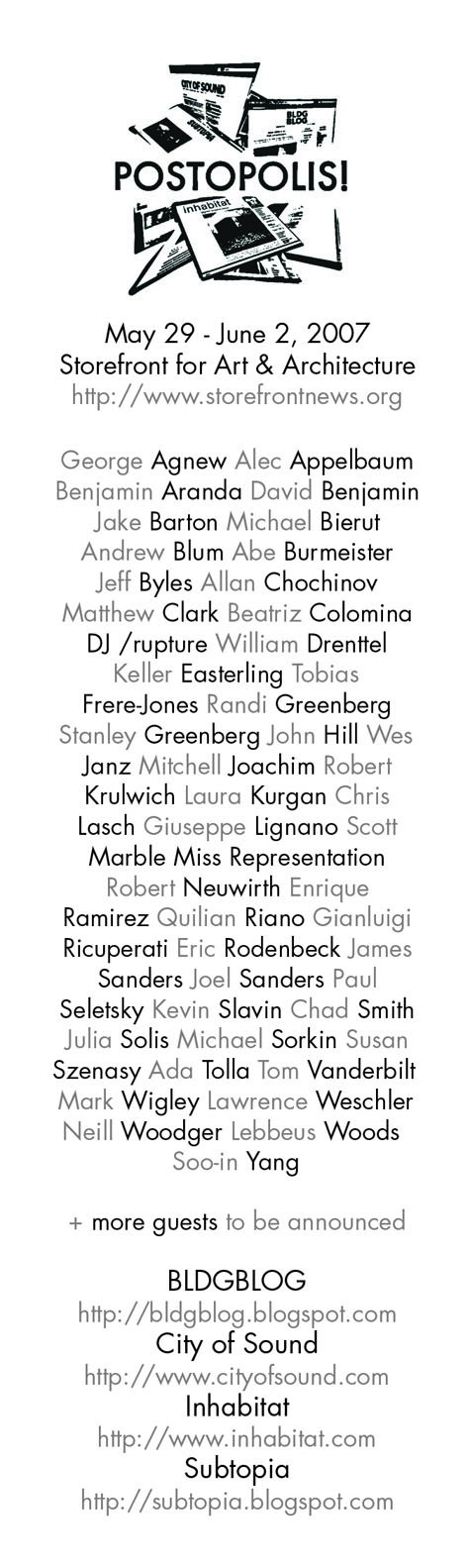 So... Since I last posted about this thing, we've added Keller Easterling, author of Enduring Innocence: Global Architecture and its Political Masquerades, in which you can read about Indonesian piracy, POW camps, hydroponic tomato farms, special economic zones, golf courses, Hindu temples, offshore wind farms, cruise ships, and other "spatial formats" of global capitalism; Jeff Byles, author of Rubble: Unearthing the History of Demolition, where we learn about "the peculiar sounds of failure" as buildings collapse, architecture turning to dust with the help of high explosives (it's a great book!); Beatriz Colomina, author of Domesticity at War, where she suggests that "postwar American architecture adapted the techniques and materials that were developed for military applications," turning domesticity into a kind of spatial appropriation of warfare; Monica Hernandez, who'll be coming in from Lifeform, a NY-based architecture firm whose work focuses on "green building, including material innovations, new technologies, and waste management issues"; Michael Kubo, the North American editor of Actar, who will be discussing blogs, books, online media, and the future of architectural publishing; Matthew Clark, an engineer at Arup; Tobias Frere-Jones, an internationally renowned typographer, discussing typography, signs, and the city; and several others, yet to be announced. We've even printed a bookmark – so you'll be saving your place in architectural texts with Postopolis! for years to come. The official schedule, meanwhile, subject to one or two last-minute changes, looks like this: 3:00pm: Robert Krulwich3:40pm: Tobias Frere-Jones5:00pm: Stanley Greenberg5:40pm: Michael Kubo6:30pm: Joseph Grima, Director of the Storefront for Art and Architecture, introduces BLDGBLOG, City of Sound, Inhabitat, and Subtopia, who will talk about their blogs, tell bad jokes, sweat through their clothes out of nervousness, then lead a pecha kucha, free and open to the public 1:30pm: Benjamin Aranda & Chris Lasch2:10pm: Matthew Clark4:00pm: Panel on sustainable design with Susan Szenasy, Allan Chochinov, Jill Fehrenbacher, and others to be announced 5:30pm: Scott Marble6:10pm: Paul Seletsky6:50pm: Ada Tolla & Giuseppe Lignano7:30pm: Michael Sorkin & Mitchell Joachim1:30pm: DJ /rupture2:50pm: Gianluigi Ricuperati3:30pm: Monica Hernandez4:10pm: Jeff Byles4:50pm: Wes Janz5:30pm: Lebbeus Woods6:10pm: Robert Neuwirth6:50pm: Jake Barton7:30pm: Joel Sanders1:30pm: Julia Solis2:10pm: Andrew Blum3:00pm: William Drenttel, Tom Vanderbilt, and Michael Bierut 4:10pm: James Sanders4:50pm: David Benjamin & Soo-in Yang5:30pm: Kevin Slavin6:10pm: Eric Rodenbeck6:50pm: Laura Kurgan7:30pm: Lawrence Weschler1:30pm: Conversations with Mark Wigley and Beatriz Colomina3:30pm: Keller Easterling4:15pm: Randi Greenberg5:00pm: Blogger open house with George Agnew, Alec Appelbaum, Abe Burmeister, John Hill, Miss Representation, Aaron Plewke, Enrique Ramirez, Quilian Riano, Chad Smith, and others to be announced 7:30pm: closing party with food, spilt drinks, and music, open to everyone  [Image: What the facade of the Storefront for Art and Architecture will look like if we get to plaster it with our logos... View larger]. [Image: What the facade of the Storefront for Art and Architecture will look like if we get to plaster it with our logos... View larger].Hopefully posts will continue to appear throughout the week – but if you're anywhere near New York in the next ten days, please come by, say hello, ask questions, stare at Bryan Finoki, use the restroom, become obsessed with architecture, give us hell for not having a single novelist in the line-up (we tried), and so on. Here's a map.
 A few months ago, I got a call from Joseph Grima, the director of New York's legendary Storefront for Art and Architecture gallery. Joseph wanted to put together some kind of event about architecture blogs – how blogs are participating in, redefining, and sometimes even leading the architectural conversation today, on the street, in the schools, at practicing design firms, etc. If architecture blogs are now changing what people talk about in fields ranging from urban planning, public transport, landscape architecture, green design, architectural history, and even archaeoastronomy and documentary filmmaking, then surely there should be some way to celebrate that, and to mark it with a public event or exhibition? 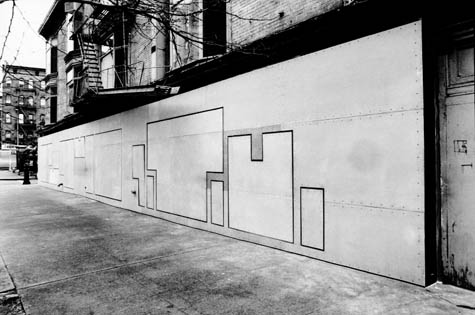 [Image: New York's Storefront for Art and Architecture, with its famous hinged facade, designed by Steven Holl and Vito Acconci]. [Image: New York's Storefront for Art and Architecture, with its famous hinged facade, designed by Steven Holl and Vito Acconci].So I said yes, in an instant, then waited for things to develop – only to learn that the event would take place over five straight days of near-continuous activity, that I'd be flown all the way to New York City for it, and that Jill Fehrenbacher of Inhabitat, Bryan Finoki of Subtopia, and Dan Hill of City of Sound would also be involved (Alex Trevi of Pruned couldn't make it). The four of us would be given total freedom to plan whatever we wanted (provided it had at least something to do with architecture, space, landscape, and the city) – to take the same motivating energy behind our various blog posts, interviews, dialogues, plotlines, reviews, ideas, rants, histories, surveys, etc., and to recreate that in person, organizing lectures, panels, pecha kuchas, film screenings, live interviews, readings, casual mingling, wine drinking, purposeful caffeine experimentation, and maybe even some walking tours and site visits... and we'd do it at all from Tuesday, May 29, to Saturday, June 2, 2007. The event would be called Postopolis! – exclamation point included. 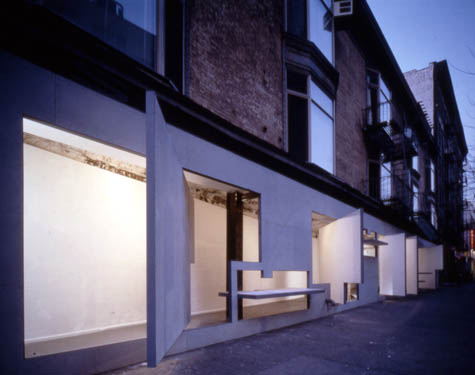 [Image: The Storefront for Art and Architecture, New York City]. [Image: The Storefront for Art and Architecture, New York City].The four of us are still in the process of assembling speakers and guests, from architects and city planners to urban explorers, military historians, novelists, and documentary filmmakers – not to mention musicians, photographers, ecologists, climate change scientists, plate tectonicists, and so on – and we'll even be putting together an event within the event so that other architecture bloggers can join in. After all, Postopolis! is meant to be about architecture blogs – not just about the four of us – so expanding the conversation to include as many other bloggers as possible only makes sense. In any case, it should be awesomely and unbelievably fun – five days to talk about everything, nonstop, live from the Storefront in Manhattan. 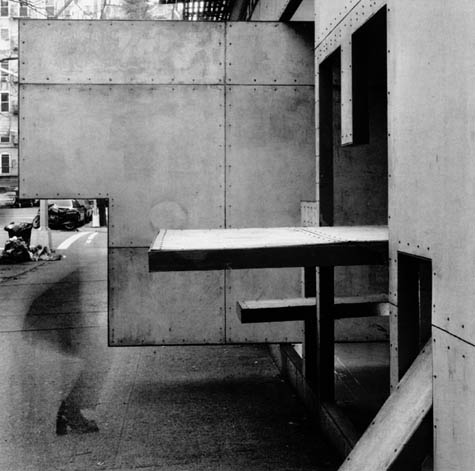 [Image: The Storefront for Art and Architecture, New York City]. [Image: The Storefront for Art and Architecture, New York City].More info will continue to come out on all of our blogs over the next month, so check back often – but if you're anywhere near New York City that week, please feel free to stop by. You'll see City of Sound, Inhabitat (check out Jill gracing the pages of Vogue this month), Subtopia, and myself, in person, with hundreds of our favorite blog posts printed out and plastered all over the walls...  Finally, thanks to Joseph Grima at the Storefront for Art and Architecture for asking us to put this together!
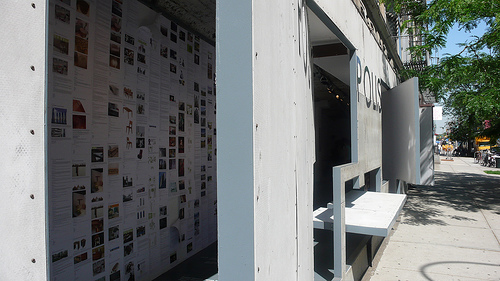 [Image: Standing outside the Storefront for Art and Architecture. Photo by City of Sound]. [Image: Standing outside the Storefront for Art and Architecture. Photo by City of Sound].It's that time of day again: I'm on my way south across the island, heading down to the Storefront for Art and Architecture, for Day 4 of Postopolis! Dan Hill has continued his coverage of the event, so if you're looking for regular updates – as opposed to my half-efforts here, full of nothing – I'd urge you all to go check out City of Sound. There's also a Postopolis! Flickr pool, if you're looking for some images of the proceedings – and I promise to start posting normal BLDGBLOG content as soon as possible (and I apologize to readers who are tired of these meager asides!). 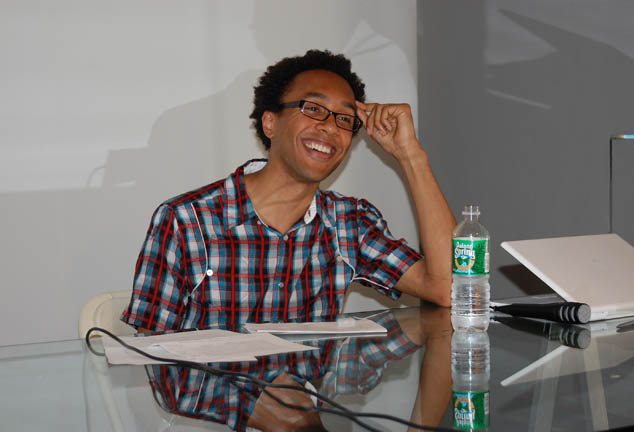 [Image: DJ /rupture, speaking yesterday at the Storefront; in some late-breaking but huge news, /rup will be spinning the Postopolis! closing party, Saturday night! Photo by Nicola Twilley]. [Image: DJ /rupture, speaking yesterday at the Storefront; in some late-breaking but huge news, /rup will be spinning the Postopolis! closing party, Saturday night! Photo by Nicola Twilley].Meanwhile, here's today's schedule: 1:30pm: Julia Solis2:10pm: Andrew Blum3:00pm: William Drenttel, Tom Vanderbilt, and Michael Bierut 4:10pm: James Sanders4:50pm: David Benjamin & Soo-in Yang5:30pm: Kevin Slavin6:10pm: Eric Rodenbeck6:50pm: Laura Kurgan7:30pm: Lawrence WeschlerHope to see you there! And don't forget the Saturday night closing party, with live sets by DJ / rupture and N-RON.
 [Image: Looking through the porous facade of the Storefront for Art and Architecture]. [Image: Looking through the porous facade of the Storefront for Art and Architecture].We're into day three of Postopolis! now. If you want to learn more about what exactly it is that's going on here, Dan Hill, over at City of Sound, has been doing a bang up job keeping track of all the speakers, offering his summaries of – and commentary on – their talks. Given time over the next few days, I'll try to do my own quick version of this; there's been some fantastic stuff so far – and I think we've sorted out most of the technical issues, so there's less to worry about, and, hopefully, more time to blog. In any case, the schedule today looks like...: 1:30pm: DJ /rupture2:50pm: Gianluigi Ricuperati3:30pm: Monica Hernandez4:10pm: Jeff Byles4:50pm: Wes Janz5:30pm: Lebbeus Woods6:10pm: Robert Neuwirth6:50pm: Jake Barton7:30pm: Joel Sanders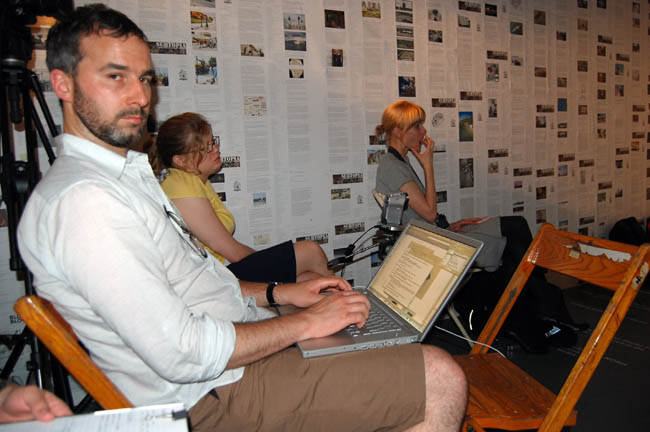 [Image: Dan Hill, live-blogging Postopolis!]. [Image: Dan Hill, live-blogging Postopolis!].So come on down. And don't miss the slowly growing Postopolis! Flickr pool for some images of the event. More soon. (Photos by Nicola Twilley).
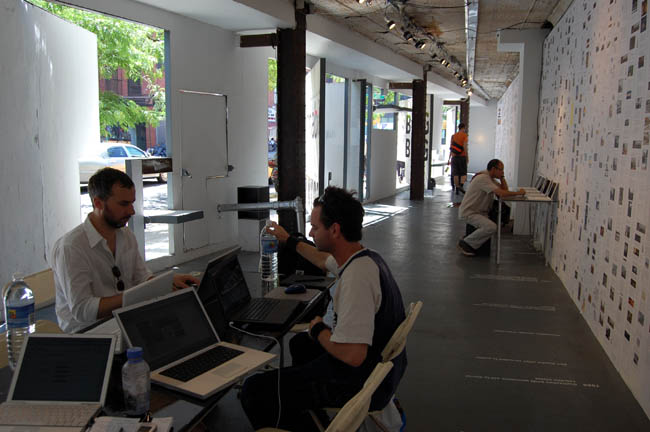 [Image: Dan Hill and Bryan Finoki sit inside the Storefront for Art and Architecture]. [Image: Dan Hill and Bryan Finoki sit inside the Storefront for Art and Architecture].Well, day one of Postopolis! is now history – and it was a blast. We had some phenomenal presentations, from Robert Krulwich, Tobias Frere-Jones, and Stanley Greenberg; we heard from Michael Kubo, of Actar, about architectural book publishing; we managed our way through a pecha kucha featuring this blog, City of Sound, Inhabitat, and Subtopia; we drank beer; and I thought the whole thing was great. 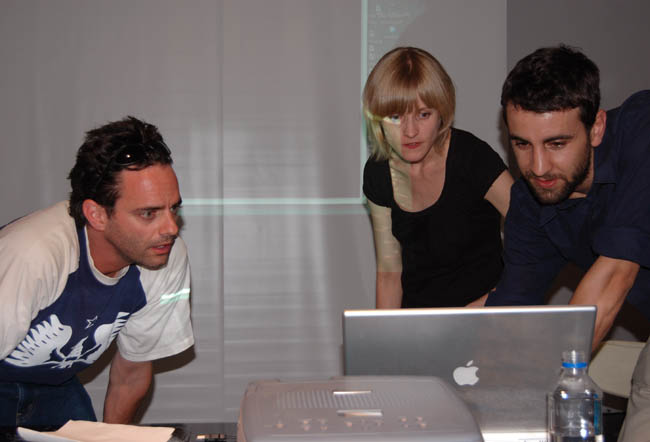 [Image: Bryan Finoki, Jill Fehrenbacher, and Joseph Grima at the Storefront for Art and Architecture; unlike Jill and Joseph, Bryan is actually watching a baseball game...]. [Image: Bryan Finoki, Jill Fehrenbacher, and Joseph Grima at the Storefront for Art and Architecture; unlike Jill and Joseph, Bryan is actually watching a baseball game...].There are some problems with audio, on the other hand, which means that a great deal of the evening's visitors didn't actually hear anything... but we'll work on that. (If you did come out and heard nothing, I apologize!) Meanwhile, City of Sound has just posted some great action shots from the day, including a live-blogged summary of Robert Krulwich's presentation; and I've got a small Flickr set forming, and there is a Postopolis! Flickr group taking shape, as well. Today, meanwhile, Wednesday, May 30, you'll be hearing from: 1:30pm: Benjamin Aranda & Chris Lasch2:10pm: Matthew Clark4:00pm: Panel on sustainable design with Susan Szenasy, Allan Chochinov, Graham Hill, and Jill Fehrenbacher (moderated by Jill) 5:30pm: Scott Marble6:10pm: Paul Seletsky6:50pm: Ada Tolla & Giuseppe Lignano7:30pm: Michael Sorkin & Mitchell JoachimSo please come out! And say hello. Be advised, meanwhile, that Michael Sorkin might not be able to attend; we'll only know when the time comes round. 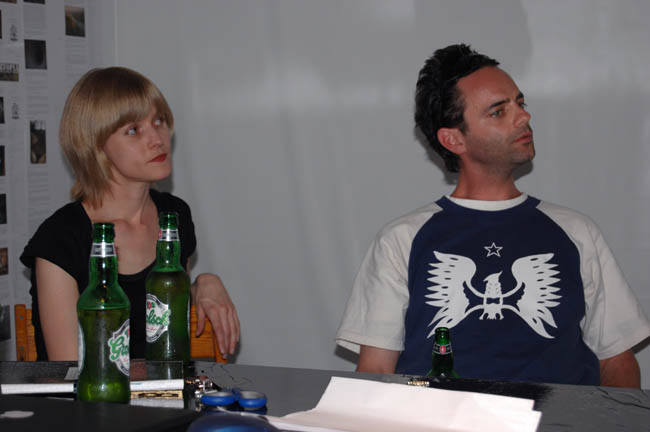 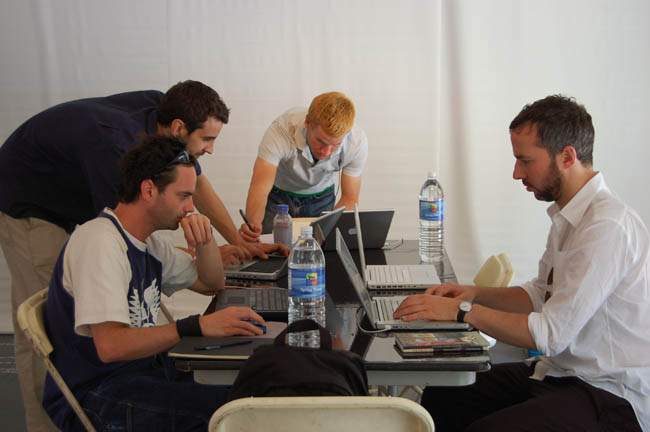 [Images: (top) Jill Fehrenbacher and Bryan Finoki watch either Geoff Manaugh or Dan Hill give a presentation; (bottom) Bryan Finoki, Joseph Grima, Geoff Manaugh, and Dan Hill set up for the day, inside the Storefront for Art and Architecture]. [Images: (top) Jill Fehrenbacher and Bryan Finoki watch either Geoff Manaugh or Dan Hill give a presentation; (bottom) Bryan Finoki, Joseph Grima, Geoff Manaugh, and Dan Hill set up for the day, inside the Storefront for Art and Architecture].And I'll keep updating everyone as the week goes on – but, for those not in NYC or who frankly don't care about Postopolis!, I'll hopefully have at least one or two new posts in the forthcoming days. (Photos by Nicola Twilley).
 [Image: The Postopolis! crew: (l-r) Joseph Grima, Jill Fehrenbacher, Geoff Manaugh, Bryan Finoki, Dan Hill, and Gaia Cambiaggi (photo by Nicola Twilley)]. [Image: The Postopolis! crew: (l-r) Joseph Grima, Jill Fehrenbacher, Geoff Manaugh, Bryan Finoki, Dan Hill, and Gaia Cambiaggi (photo by Nicola Twilley)].The doors of Postopolis! burst open tomorrow. First up, at 3:00pm: Robert Krulwich3:40pm: Tobias Frere-Jones 5:00pm: Stanley Greenberg5:45pm: Michael Kubo, North American editor for Actar, discusses books, blogs, and the future of architectural publishing with Kevin Lippert, founder of Princeton Architectural Press6:45pm: Joseph Grima, Director of the Storefront for Art and Architecture, introduces BLDGBLOG, City of Sound, Inhabitat, and City of Sound, who will talk about their blogs and then lead a pecha kucha So if you're in NYC, please stop by...! And there's a lot more news coming soon.
Postopolis! LA has been gathering pace over the past few weeks, despite the silence, so it seemed like high time for an update. Although we're still finalizing both the schedule and the list of speakers, it's looking amazing so far. [Image: Logo by Joe Alterio].The whole thing kicks off in less than two weeks, running from Tuesday, March 31, to Saturday, April 4, and from 5pm-11pm everyday. The venue has finally been announced, as well: we'll be up in the sky, watching the sun set every evening from the rooftop pool, deck, and bar of the Standard Hotel in downtown Los Angeles. The event is free and open to everyone, with a cash bar and free wifi, so come on down for some landscape and architecture, bring your favorite wireless device, and wear your Speedo or bikini if you want to use the pool (it's more like a wading pool, FYI). And, of course, we'll be keeping our fingers crossed for no rain. The list of speakers, as it now stands, includes unbelievably interesting people. Here's a glimpse: —Ari Kletzky (Founder, Islands of LA)
—Austin Kelly (Principal, XTEN Architecture)
—Ava Bromberg (Artist, In the Field)
—Ben Cerveny (Strategic and Conceptual Advisor, Stamen Design)
—Benjamin Bratton (Architect and Theorist)
—Bryan Boyer (Organizer, Helsinki Design Lab 2010)
—Christina Ulke (Artist, Co-Founder, C-Level, and Editor, Journal of Aesthetics and Protest)
—Christopher Hawthorne (Architecture Critic, Los Angeles Times)
—David Burns, Matias Viegener, and Austin Young (Founders, fallen fruit)
—David Gissen (Theorist and Historian, CCA)
—Dwayne Oyler (Architect and Principal, Oyler Wu Collaborative)
—Eric Rodenbeck (Founder, Stamen Design)
—Freya Bardell and Brian Howe (Principals, Greenmeme)
—Fritz Haeg (Artist and Writer)
—Gary Dauphin (Writer and Critic)
—Jeffrey Inaba (Architect and Principal, Inaba Projects)
—Ken Ehrlich (Artist and Writer)
—Mary-Ann Ray (Architect, Writer, and Principal, Studio Works Architects)
—Matthew Coolidge (Director, Center for Land Use Interpretation)
—Michael Dear (Professor of Geography, USC)
—Michael Downing (Deputy Chief of Counter Terrorism, Los Angeles Police Department)
—Mike the Poet (Poet and Writer)
—Orhan Ayyüce (Architect, Blogger, and Senior Editor, Archinect)
—Patrick Keller (Architect and Principal, Fabric)
—Paul Petrunia (Founder, Archinect)
—Robert Miles Kemp (Designer and Principal, Variate Labs)
—Sam Grawe (Editor-in-Chief, Dwell)
—Sharon Johnston and Mark Lee (Architects and Principals, Johnston MarkLee)
—Stephanie Smith (Founder, Ecoshack)
—Steve Roden (Musician and Artist)
—Ted Kane (Architect and Author, Polar Inertia)
—Whitney Sander (Architect and Principal, Sander Architects)
—Yo-Ichiro Hakomori (Architect and Principal, wHY Architecture)
—Zach Frechette (Editor-in-Chief, GOOD) That's nowhere near the final list, though, as we've also got a handful of media panels planned for Saturday, April 4; these will include Matt Chaban from the Architect's Newspaper, Dakota Smith from Curbed LA, Greg J. Smith of Serial Consign & Vague Terrain, journalist Alissa Walker, a variety of Archinect school bloggers, and many, many more. So stay tuned for more updates. And, don't forget, Postopolis! LA will be hosted by BLDGBLOG, City of Sound, mudd up!, Plataforma Arquitectura/ Arch Daily, Subtopia, and we make money not art, under the organization of the Storefront for Art and Architecture and the sponsorship of ForYourArt. Hope to see you there!
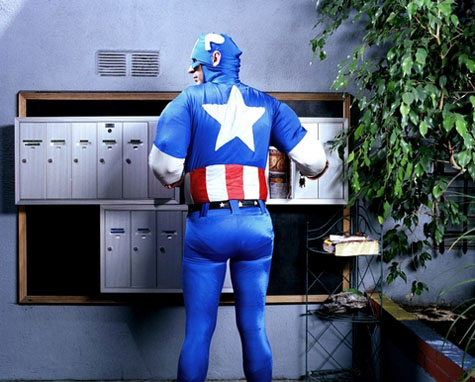 [Image: From the amazing Superheroes series by photographer Gregg Segal]. [Image: From the amazing Superheroes series by photographer Gregg Segal].As many readers will no doubt know, the New York Times last week sent a " cease and desist" letter to Apartment Therapy, demanding that AT stop posting New York Times proprietary material on their website. Though the story has since undergone a few less confrontational developments – i.e. Apartment Therapy "reached both the NYTimes legal and marketing [departments] on Friday and they called off their take down notice pending our initial conversation" – the issue is still a very valid one, and it cuts to the heart of many financial problems now facing both print and online media. As but one example, it has always struck me as somewhat economically lopsided that in order for Dwell to run a photograph in the magazine, we have to pay the photographer a not inconsiderable use fee; but that I, as BLDGBLOG, can simply post that photograph – or Dezeen can post it, or materialicious, or Apartment Therapy – and, at least for now, no one has to pay a cent. (See further thoughts on this sentence in the comment thread, below).In this business model, magazines like Dwell and Wallpaper – or the New York Times – become a kind of unacknowledged production budget for architecture blogs (this site included). Metropolis pays for a photographer to fly to, say, Chicago or Melbourne or Eagle Rock... and an architecture blog then gets free photographs to post on their website, from which they can earn a constant stream of advertising revenue. From the perspective of an architecture and design blogger, it can't help but feel a bit like the easy money days of the derivatives market: you wait till someone else pays for a photographer to document something, and then you jump in and skim ad revenue off of that transaction. The value of your website is derived value; if the magazine photography economy were to collapse, so would your third-party ability to extract revenue from it. While I was Senior Editor at Dwell, this hit some particularly surreal notes, such as when an architecture blogger – whose entire visual content has been bought and paid for by other people – emailed me to accuse Dwell of stealing from architecture blogs because we had run images (at no small expense to us) of houses that once appeared on that person's website. In any case, my point here is not to argue, regressively, from the standpoint of magazines (after all, BLDGBLOG has been around for 5 years, hosting other people's photographs) or to advance a kind of 1990s-era model of intellectual property, but to point out that this conversation is far from resolved – and that I'm thus particularly excited to announce that Postopolis! LA will include an entire panel about this very subject. Catherine Ledner, Dave Lauridsen, Gregg Segal, Misha Gravenor, and Tom Fowlks, professional photographers who have worked for the likes of National Geographic, Wired, Newsweek, Dwell, Popular Science, Esquire, the New York Times Magazine, and countless others, will be joining us on Saturday, April 4, to talk about the financial and/or reputational pros and cons of blogs, magazines, online portfolios, Flickr accounts, and so on. It's interesting, for instance, in this context, that even mundane technical questions – such as whether to host your work online via a Flash website (which prevents bloggers from downloading your work) – are actually legally motivated decisions made to protect the financial integrity of your portfolio, not aesthetic or stylistic choices at all. So what do these photographers think of Flash as a form of self-protection? Or of seeing their work on architecture blogs – or, for that matter, of never seeing their work on architecture blogs? Does this result in more (or fewer) paid commissions? What is the ideal balance here between exposure and financial compensation? The questions are innumerable, and come as part and parcel of the ongoing implosion of the publishing industry, with newspapers and magazines folding (or laying off staff) left and right, and with no realistic new business model yet taking shape. Watch for this panel coming up on the evening on Saturday, April 4. It will take place in the context of an entire day themed about the future of media, with editors-in-chief, bloggers, journalists, and many more on hand to discuss the changing industrial landscape. By the way, the complete Postopolis! LA schedule will be announced shortly – so stay tuned!
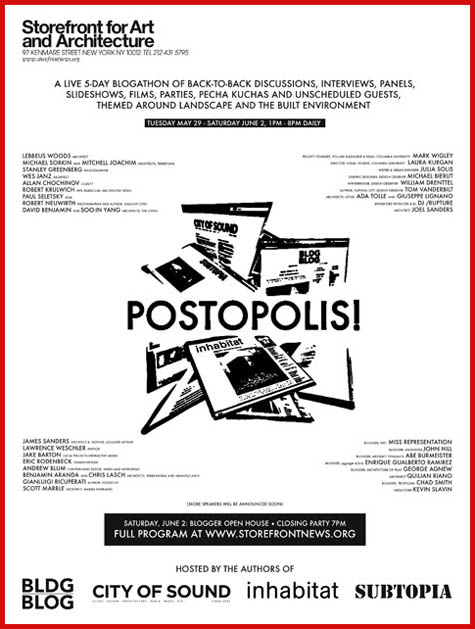 A poster for Postopolis! will be coming out soon (without a red border), including the list of speakers as it now stands – and I'm unbelievably excited about this thing. I really can't wait. So: scattered over the course of five days, from May 29 to June 2, from 1pm-8pm everyday, at the Storefront for Art and Architecture in New York City, you'll be hearing from, among many others yet to be announced: Lebbeus Woods, Laura Kurgan, Michael Sorkin & Mitchell Joachim, Stanley Greenberg, Joel Sanders, Susan Szenasy, DJ /rupture, Andrew Blum, Jake Barton, William Drenttel, Tom Vanderbilt, Michael Bierut, Lawrence Weschler, Robert Krulwich, Benjamin Aranda & Chris Lasch, Randi Greenberg, Allan Chochinov, Julia Solis, Ada Tolla & Giuseppe Lignano, Scott Marble, Paul Seletsky, Robert Neuwirth, Wes Janz, James Sanders, Eric Rodenbeck, Kevin Slavin, Gianluigi Ricuperati, Quilian Riano, Miss Representation, Enrique Gualberto Ramirez, George Agnew, Chad Smith, Abe Burmeister, John Hill... and a lot more to come (including unannounced guests who just happen to be in New York that week). So it should be a blast. Stay tuned for specific times and so on, coming soon – and if you're anywhere near NY, please consider stopping by: it's not an academic conference, and the more people the merrier... Finally, the other three blogs involved in planning all this are City of Sound, Inhabitat, and Subtopia – with the indispensible help of Joseph Grima, from the Storefront for Art and Architecture.
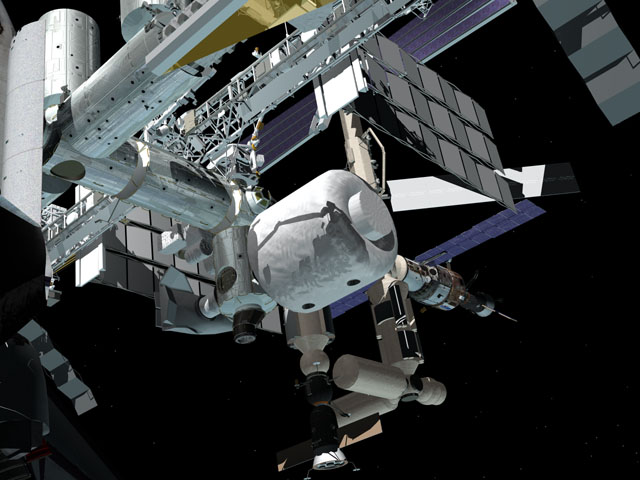 [Image: NASA's TransHab module, attached to the International Space Station. TransHab designed by Constance Adams; image found via HobbySpace]. [Image: NASA's TransHab module, attached to the International Space Station. TransHab designed by Constance Adams; image found via HobbySpace].Last week, Metropolis posted a short article by Susan Szenasy discussing a recent talk given by NASA architect Constance Adams. Adams designed the TransHab, an inflatable housing module that connects to the International Space Station. Her work, Szenasy explains, shows how architects can successfully "interface people with... interiors in space" – with strong design implications for building interiors here on Earth. 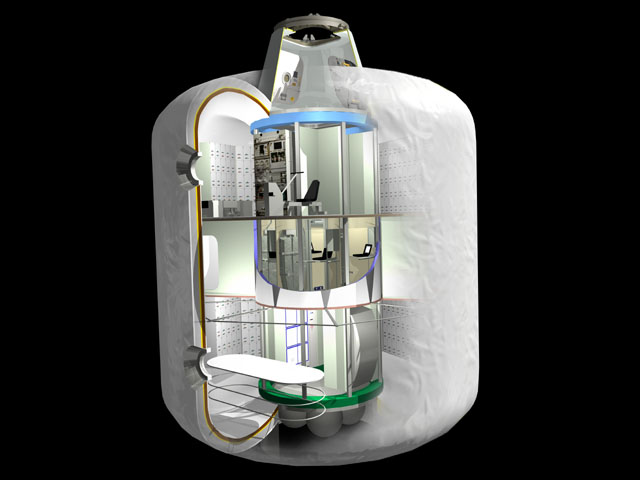 [Image: NASA's TransHab module; image via HobbySpace]. [Image: NASA's TransHab module; image via HobbySpace].As Metropolis reported way back in 1999, Adams's "path to NASA was a circuitous one. After graduating from Yale Architecture School in the early 1990s, she worked for Kenzo Tange in Tokyo and Josef Paul Kleiheus in Berlin, where she focused on large projects, from office buildings to city plans. But in 1996, when urban renewal efforts in Berlin began to slow down, she returned to the United States." That article goes on to explain how her first project for NASA was undertaken at the Johnson Space Center; there, she worked on something called a " bioplex" – a "laboratory for testing technologies that might eventually be used" on Mars, Metropolis explains. The bioplex came complete with "advanced life-support systems" for Mars-based astronauts, and it was thus Adams's job "to design their living quarters." A few years later came the TransHab module. If one is to judge from the architectural lay-out of that module, we can assume that domesticity in space will include "bathrooms, exercise areas, and sick bays," as well as "sleeping and work quarters," an "enclosed mechanical room," a few "radiation-shielding water tanks," and even a conference room with its own "Earth-viewing window." 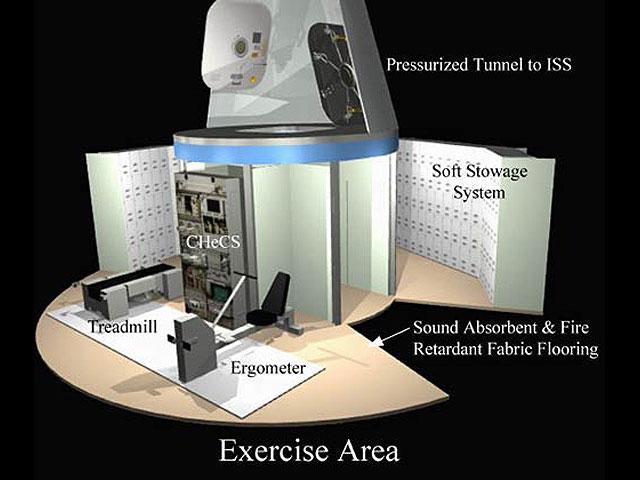 [Image: The TransHab, cut-away to reveal the exercise room and a "pressurized tunnel" no home in space should be without. Image via Synthesis Intl. (where many more images are to be found)]. [Image: The TransHab, cut-away to reveal the exercise room and a "pressurized tunnel" no home in space should be without. Image via Synthesis Intl. (where many more images are to be found)].For more info about Adams and her architectural work, see this 1993 interview (it's a pretty cool interview, I have to say); download this MP3, which documents a conversation between Constance Adams and journalist Andrew Blum (the latter of whom will be speaking at Postopolis! next week); or click way back to BLDGBLOG's slightly strange, and now rather old, look at Adams (and many other astro-structural subjects) in Lunar urbanism 3. So I'll just end here with a few images, all of which are by Georgi Petrov, courtesy of Synthesis Intl.. According to Metropolis, these "show the different levels and spatial configurations for SEIM, a semi-inflatable vehicle created for both flight and planetary or lunar deployment." It was developed for NASA; you're looking at Level 3. 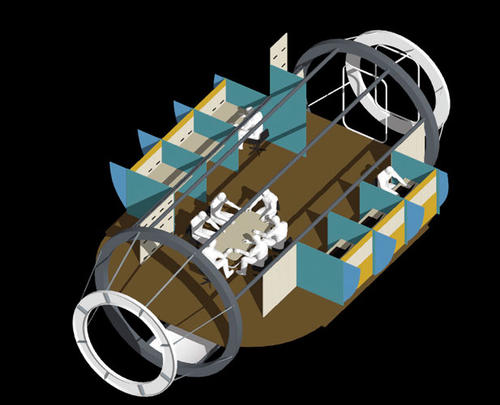 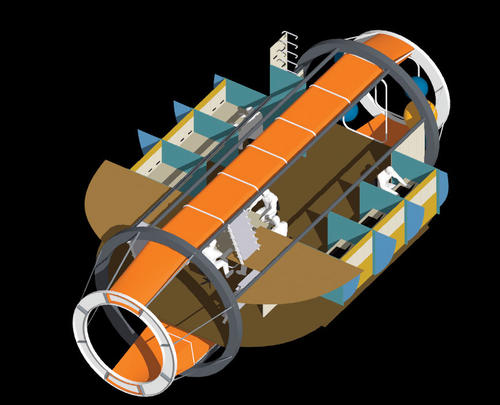 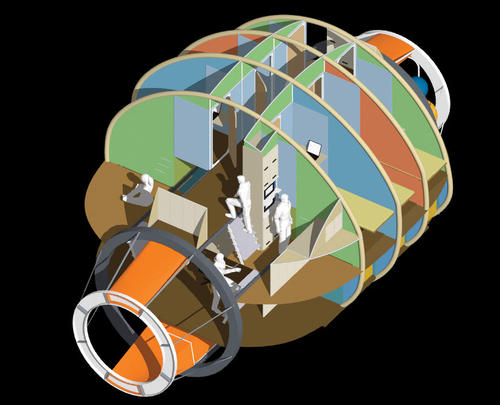 [Images: Georgi Petrov, courtesy of Synthesis Intl.].[Note: Susan Szenasy, the Editor In Chief of Metropolis magazine, will also be speaking at Postopolis! next week. Stay tuned for an up-to-date schedule]. [Images: Georgi Petrov, courtesy of Synthesis Intl.].[Note: Susan Szenasy, the Editor In Chief of Metropolis magazine, will also be speaking at Postopolis! next week. Stay tuned for an up-to-date schedule].
For its landmark 50th issue, British architecture and design magazine Icon put out a call for manifestos "from 50 of the most influential people in architecture and design" today. 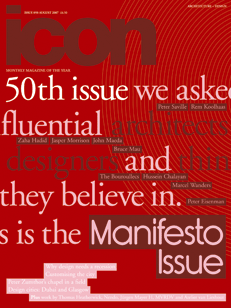 [Image: The cover of Icon #50]. [Image: The cover of Icon #50].The manifestants – manifestators? manifestees? manifestors? – "include Rem Koolhaas, John Maeda, Zaha Hadid, Hussein Chalayan, Jasper Morrison, Peter Eisenman, Peter Saville, Foreign Office Architects, Joep van Lieshout, the Bouroullecs and Ken Livingstone," the " rebel mayor" of London. In Livingstone's case, he, Richard Rogers, and Peter Bishop have basically submitted a new press release for Design for London ("Design for London wants London to be a city that works for all its people, for its economy and for the environment"); in Zaha Hadid's case, she sent in what appears to be a three-part digital rendering of... London? From the air? Gone topographically sinuous and structurally cubic? Or perhaps she's redesigned Peter Eisenman's recent Memorial to the Murdered Jews of Europe by moving it to the banks of a river and constructing it from glass. In any case, the issue also contains manifestos by design titans like Bruce Mau, John Thackara, and Stefan Sagmeister; architects such as Joshua Prince-Ramus, Thom Mayne, Bernard Khoury, Sam Jacob, Stephen Holl, Vito Acconci, Greg Lynn, Teddy Cruz, and UN Studio; curators Hans Ulrich Obrist and Paola Antonelli; and -ahem- an L.A.-based architecture blogger called BLDGBLOG. As the only blogger included in the fifty manifestos, I'm a little stunned – even half-seriously convinced that some sort of mistake has been made – but hey: it's always fun to be asked for your own architecture manifesto. 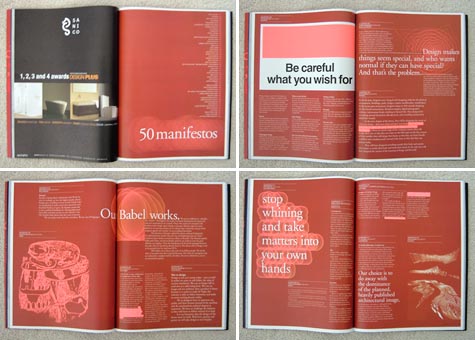 [Image: Some page-spreads from Icon #50]. [Image: Some page-spreads from Icon #50].On the other hand, is BLDGBLOG really written by one of "the most influential people in architecture and design"...? Next to Rem Koolhaas, Bruce Mau, Ken Livingstone, and Zaha Hadid? I would suspect not, frankly. I would imagine that there's a little bubble of influence somewhere; but globally? Historically? I wouldn't exactly complain if that were the case – if people really wanted a bit more J.G. Ballard, John McPhee, Jeff VanderMeer, terrestrial prostheses, heliocentric Pantheons, and undiscovered bedrooms in their architectural discourse – but I'm not actually convinced that's true. I think people would rather learn where to buy designer couches. Anyway, long-term readers of BLDGBLOG won't find any surprises in what I have to say: There is architecture lining the streets of New York and Paris, sure – but there is architecture in the novels of Franz Kafka and W.G. Sebald and in The Odyssey. There is architecture on stage at the Old Vic each night, and in the paintings of de Chirico, and in the secret prisons of military superpowers. There is architecture in our dreams, poems, TV shows, ads and videogames – as well as in the toy sets of children. The suburbs are architecture; bonded warehouses are architecture; slums are architecture; NASA’s lunar base plans are architecture – as are the space stations in orbit [above] us." But, still, if you run into a copy of Icon #50, be sure to check it out. And I should also mention that the issue includes a positive review of Postopolis!, written by Bill Millard, who sat through all five sweaty days of the event with us, taking notes and asking questions. More on Postopolis! can be found here and here. (Note: The phrase "nihilistic ravings of insomniac bohemians," used in the title of this post, is an excerpt from Icon editor Justin McGuirk's introduction to the 50 manifestos).
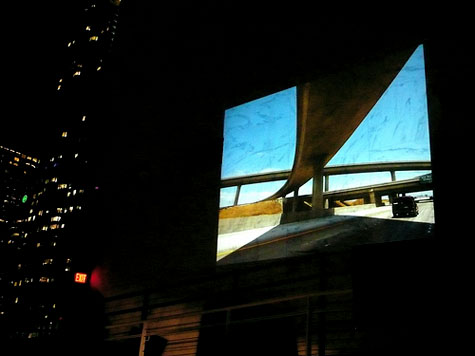 [Image: A dream of freeways above the city, at Postopolis! LA; I believe this was from Ted Kane's presentation. Photo by Dan Hill]. [Image: A dream of freeways above the city, at Postopolis! LA; I believe this was from Ted Kane's presentation. Photo by Dan Hill].One Postopolis!, a minor car accident, and 500 miles later, I'm back in the rain of San Francisco. I owe a huge thanks to everyone who came out for the event last week, from my fellow bloggers ( Bryan, Jace, David A./ David B., Régine, and Dan) to Joseph Grima and the crew of Storefront for Art and Architecture, by way of ForYourArt, who found us the venue, organized several daytrips, and brought the whole thing into real time. Thanks not only for coming along to see it unfold, but for sticking with us through microphone feedback, near-freezing rooftop temperatures, and the odd delay. If you get a chance, definitely visit the websites of the people who presented to learn more about their work; you can find links here.
 A few weeks ago, I posted about the "typical dream" of a New Yorker, in which said New Yorker one night discovers a whole extra room hidden away somewhere in an otherwise cramped Manhattan apartment – opening up a disguised door, in the back of the closet... and finding a fully furnished 20'x20' master suite. With a bearskin rug. Or a new bathroom, with gold-plated taps and a trouser press. Or an entire backyard, full of gas grills, hidden behind the living room wall. The ecstasy of having more space in Manhattan. I then suggested that someone should go around New York interviewing people who have had this dream – or asking people who have never had this dream to ad lib, describing what sorts of extra rooms and spaces they would most like to find, tucked away behind the limited square-footage of walls and apartment living. You'd then edit all the responses up into a radio show – and broadcast it live at rush hour, without explanation. The city goes wild. Manhattan is full of extra rooms! people scream. There are secret hallways everywhere! People start knocking on walls and rifling through closets, desperately searching for a place of their own. Maybe an undiscovered planetarium in the basement crawlspace. In any case: we're now doing it. We're making the radio show.  We We, in this case, is BLDGBLOG and DJ /rupture (who spoke at Postopolis! last month); we'll be putting your extra room fantasies on the air... Specifically, /rup's got a weekly radio show on WFMU – 91.1 FM in New York City – and, to collect your dreams, we've signed up for a free, joint voicemail account. It's voicemail as public recording booth. So what's your extra room fantasy? You don't have to live in New York to answer. If you woke up in the middle of the night and found a door... where would you want it to go? Call +1 (206) 337-1474 and let us know. If we like your story, we'll put you – anonymous, woven into a background of music, without explanation – live on the air in New York City, then podcasted around the world and available via MP3.  Meanwhile, there are ten thousand other potential uses for a voicemail account and a weekly radio show. Over the next few weeks and months, then, DJ /rupture and I will be switching things up: asking new questions and looking for new material. For instance, there'll be a field-recordings-by-phone project – where someone standing on the Oregon coast can call +1 (206) 337-1474 and record two minutes' worth of coastal ambiance, which will later be played live on the radio – and a sound-of-your-favorite-bus-stop-as-recorded-by-a-cell-phone project, and a sound-of-your-empty-office-elevator project, and any number of other possibilities. The sound of migrating geese, recorded by cell phone. The sounds of 5th Avenue, recorded using every public phone booth on that street – a kind of sonic history of public space. Maybe even the sounds of famous architectural structures: you're standing inside an empty room in the Empire State Building – so you give us a call: +1 (206) 337-1474. The volumetric reverb of the Taj Mahal. Summer rain pattering against the windows of the Gherkin. Or you're standing on a terrace outside L.A.'s Griffith Observatory, recording the desert wind on an iPhone. It's the voicemail account as musical instrument. Field recordings by phone. How to listen to a landscape. Podcasting space. The unexpected future of audio surveillance.  [Image: DJ /rupture, live in France; DJ /rupture – aka Jace Clayton – speaking at Postopolis! (photo by Nicola Twilley)]. [Image: DJ /rupture, live in France; DJ /rupture – aka Jace Clayton – speaking at Postopolis! (photo by Nicola Twilley)].So stay tuned to WFMU, 91.1 FM in New York City, on Wednesday nights, to hear the results of the voicemail project – the first voicemail fantasies should appear within two weeks – mixed in with some kickin' rekkids by the one and only DJ /rupture. (For a little more about the idea behind this project, see The undiscovered bedrooms of Manhattan).
 [Image: Photo by Satya Pemmaraju, courtesy of the Architectural League]. [Image: Photo by Satya Pemmaraju, courtesy of the Architectural League].Here are some upcoming events, courses, and lectures that I would attend if I could: —Tonight, March 26, author William L. Fox speaks in Reno at the Nevada Museum of Art about his new exhibition, co-curated with Matthew Coolidge of the Center for Land Use Interpretation, about the Trans-Alaska Pipeline. Hopefully Fox will also discuss his newest book, Aereality: The World From Above; Fox's books are an ongoing exploration of "extreme environments" and their impact on human cognition, from Antarctica and the gridless deserts of Nevada to the Australian Outback and even Mars. —Also today, March 26, kicking off in Los Angeles (and then again four days from now, on March 30, in Chicago) is an Urban Escape and Evasion course run by the group OnPoint Tactical. The premise of this is hilarious but fascinating: "While on an international business trip, you are kidnapped and held for ransom. A terrorist attack closes the business district and you find yourself in a fix. How do you stay alive? How do you get to safety on your own?" This class provides leading-edge skills to civilians who live and work in challenging urban environments or in urban centers that may destabilize during a crisis. Topics covered include covert movement (day vs. night), the judicious use of caches, understanding urban baseline movement and urban awareness training, the use of urban disguises and false papers/identification, lock picking, escaping from unlawful custody, obtaining and driving local transportation, the use of "specialized" urban gear, and instruction on how to develop urban escape and evasion go-bags, etc. If you already know how to do all that, of course, there are also advanced courses. For that, somewhere in the Philadelphia/Camden, NJ, area, beginning April 30, trainees will "spend time in the city in an extensive (extended) escape and evasion simulation. Students will be required to obtain food, water, and shelter. They will need to avoid capture, and they will be required to complete several tests or scenarios that will require advanced students to truly apply their scout and urban survival skills." I love OnPoint's final line: "Warning: Massive waiver required for this course!" These "urban survival" courses are run in Los Angeles, Philadelphia, Chicago, Dallas, Salt Lake City, and Conway, Arkansas. If only I had known about OnPoint earlier, I would have invited them to speak at Postopolis! LA. Check out their lock-picking gear. (Spotted via kottke.org).  [Image: Think you'll survive a corporate kidnapping (or the coming apocalypse)? OnPoint Tactical disagrees; sign up for their courses to learn more]. [Image: Think you'll survive a corporate kidnapping (or the coming apocalypse)? OnPoint Tactical disagrees; sign up for their courses to learn more].—March 27-29: The City From Below hits Baltimore, Maryland, exploring, among other things, how "unanticipated futures are being imagined and built" in the contemporary metropolis. My problem with the event write-up, however, is that participating in "social justice struggles" appears to mean adopting a new, niche vocabulary full of analytically useless words like "herstories" – i.e. feminism's own " Freedom Fries" moment – excluding from your audience many of the very people who would benefit most from such discussions. Emerging forms of grassroots urban self-governance don't require bizarre, over-academized newspeak about "metropolitan rearticulation" and "horizontal framework[s] of participation." We don't need to know that you've read Judith Butler in order to organize a better youth basketball league, plant a roof garden, or campaign for affordable day care. I also have a growing problem with the fetishization of "resistance" in today's leftwing political writing, as if "resisting" something is, in and of itself, a technique that only the left is capable of performing. But the Bush Administration "resisted" the Geneva Conventions and Alberto Gonzales "resisted" civil liberties laws, even as the Mormon Church "resisted" gay marriage in California. Resistance has no political affiliation, and it is tactically meaningless to promote resistance as a goal in and of itself. One need look no further than the conservative Counter-Reformation; as its very name indicates, this was a massive act of cultural and intellectual resistance. Indeed, to pretend that "resistance" is worthy of commendation at all only makes sense if you've built your entire movement around a shifting sequence of enemies who, by your own admission, are always one step ahead of you. The alternative – articulating, out of the blue and in the middle of nowhere, unsolicited enthusiasm for a more equitable future for everyone – would seem both substantially more effective and unifying. It seems little wonder, then, that many otherwise intensely interesting urban social justice movements remain rhetorically self-ghettoized, when their own communication strategies seem to exclude the very people they most urgently need to convince. —On Monday, March 30, London's Complex Terrain Laboratory will begin a four-day symposium about P. W. Singer's important new book Wired for War (previously mentioned on BLDGBLOG here). As the event unfolds, regular updates will be posted online. 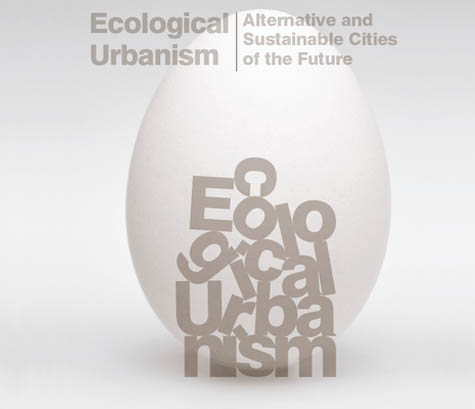 [Image: Ecological Urbanism at the Harvard GSD]. [Image: Ecological Urbanism at the Harvard GSD].—If it wasn't for Postopolis! LA, I would be in Boston, attending Harvard's Ecological Urbanism conference, running April 3-5. "While climate change, sustainable architecture, and green technologies have become increasingly topical," we read, "issues surrounding the sustainability of the city are much less developed." The conference is organized around the premise that an ecological approach is urgently needed both as a remedial device for the contemporary city and an organizing principle for new cities. An ecological urbanism represents a more holistic approach than is generally the case with urbanism today, demanding alternative ways of thinking and designing. Speakers include – and the list looks great – Rem Koolhaas, Andrea Branzi, Stefano Boeri, Anuradha Mathur, and super-dean Mohsen Mostafavi, among many, many others. —Saturday, April 4, in Montreal, the excellent Canadian Centre for Architecture will sponsor Mapping Rural Montréal: "Artist Amy Franceschini leads an exploration of rural sites and activities in Montréal, questioning the dichotomy of country and city (in English). $10 per person. Free for children under 12. Reservations required: (514) 939-7026." —On April 25, Esotouric will be hosting a bus tour of Raymond Chandler's Los Angeles: "Bungalows. Crime. Hollywood. Blondes. Vets. Smog. Death. This was Raymond Chandler’s Los Angeles, which resonated from deft and melancholy fits of his writer’s bow." Esotouric's Reyner Banham Loves Los Angeles tour also looks well worth a spin. —Finally, for now – as there are dozens and dozens of other amazing events I could mention – the Architectural League in New York is hosting what sounds like an exciting two-day conference called New Architectures of India, from April 30-May 1. It will "address the architectural and urban forms that are emerging as a turbulent 'second modernity' rearranges a vast part of the landscape of India." All of these are barely the tip of the iceberg, however; I'll hope to keep track of other lectures, events, gallery openings, conferences, courses, and such like as the year trundles on.
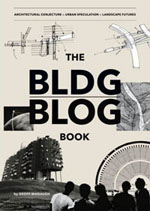
I'm still reeling from the announcement of Postopolis! – but the good news keeps on coming.  To make a long story still rather long... Back in January, Alan Rapp, the art, design, and photography editor for Chronicle Books, attended a BLDGBLOG event hosted by the Center for Land Use Interpretation here in Los Angeles. Alan and I met, kept in touch, had a pizza, talked about David Cronenberg; and then, last month, we organized an event together in San Francisco. Somewhere in there the idea of a BLDGBLOG book came up – which I soon turned into a formal proposal... and now it's official: Chronicle Books will be publishing a BLDGBLOG book in Spring 2009 – and my head is spinning! BLDGBLOG: The Book! The BLDGBLOG Book!I just can't even believe how many possibilities there are with this thing. It's a little crazy. In a nutshell, though, it'll be divided up into three major sections – Architectural Conjecture, Urban Speculation, and Landscape Futures – covering everything I've already covered here and more... From plate tectonics and J.G. Ballard to geomagnetic harddrives and undiscovered Manhattan bedrooms, via offshore oil derricks, airborne utopias, wind power, fossil cities, statue disease, inflatable cathedrals, diamond mines, science fiction and the city, pedestrianization schemes, the architecture of the near-death experience, Scottish archaeology, wreck-diving, green roofs, W.G. Sebald, flooded Londons of the climate-changed future, William Burroughs, Andrew Maynard, LOT-EK, Rupert Thomson, The Aeneid, shipbreaking yards, Die Hard, Pruned, Franz Kafka, Rem Koolhaas, tunnels and sewers and bunkers and tombs, micronations, underground desert topologies, Mars, Earth, lunar urbanism, sound mirrors, James Bond, the War on Terror, earthquakes, Angkor Wat, robot-buildings and the Taj Mahal, Archigram, the Atlas Mountains, refugee camps, Walter Murch, suburbia, the Maunsell Towers... and about nine hundred thousand other topics, provided I can fit them all in. There will be interviews, essays, quotations, photos, original artwork – and hopefully even a graphic novel, strung throughout the book. And it will be well-designed and affordable! And it will put all existing architecture books to shame. Every single one of them. Except maybe a few... And, importantly, even if there's someone out there who's read every single post on this site – I know I haven't – they'll still find loads of new material. 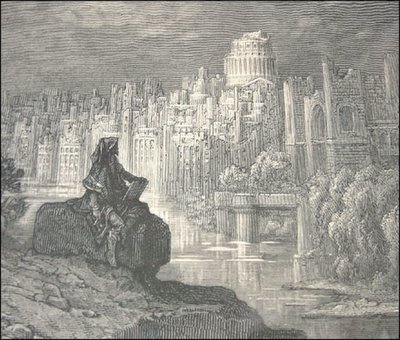 Further, since I'll more or less be writing this thing over the next six months, I'd love it – love it! – if BLDGBLOG readers wanted to make suggestions, or send me links, or leave comments, or tell me what to avoid... In fact, half the joy of writing BLDGBLOG has always been the comments, so I hope I can even figure out a way to include the best of them in the book somehow, either chasing down anonymous readers for permission or... something, I don't know, but the whole point is to be open to everyone's input and ideas. A BLDGBLOG book Flickr pool, perhaps... Or a design contest... A questionnaire... What's your favorite bus stop in the world and why? Who knows – but this should be an absolute blast – and I'll make sure that the book is actually worth picking up. You won't just get a bunch of crap you've already read, reprinted word-for-word from the blog, served back to you for $30 (or $20, or $25...). But, man, I don't even know how many blogs make the leap into book-form! So I'm also nervous. But excited. And a little delirious with possibilities. Hoping that I do it right. So look out for BLDGBLOG: The Book, or The BLDGBLOG Book, or whatever it will eventually be be called, coming soon to a Borders near you. Spring 2009. Chronicle Books. In a deal that never would have happened had it not been for Alan Rapp. And, of course, without so many hundreds – and hundreds – of people out there, who went out of their way to help BLDGBLOG find an audience – or who just did or wrote or built or made or said something cool, thus supplying me with material – I might never have started blogging at all. So I don't want to jump into some kind of Academy Award acceptance speech here, but I really do have to say thanks to dozens and dozens and dozens of people, including, but in no way limited to – hold your breath: my wife, for editing almost literally every single post I've written on this thing and making everything, universally, on all levels, better; Javier Arbona, Bryan Finoki, John Jourden, and Paul Petrunia, in particular, of Archinect for the early break, as well as the entire Archinect crew for putting up with me there; Alex Trevi at Pruned; Marcus Trimble of gravestmor; Simon Sellars at Ballardian; Sarah Rich and Jill Fehrenbacher; Jonathan Bell of things magazine; David Maisel; Cory Doctorow, Jason Kottke, William Drenttel, Jim Coudal, Bruce Sterling, Steve Silberman, Robert Krulwich, Lawrence Weschler, Douglas Coupland, Warren Ellis; The Kircher Society; all the people I've interviewed; all the people who have participated in BLDGBLOG events; all the commenters out there, both regular and one-time only, including people who have disappeared (or who no longer leave comments – I miss you!); all the people who have sent me tips; Christopher Stack; Dan Polsby; friends of mine who were part of BLDGBLOG at the very, very beginning, before it even had a logo, including Jim Webb, Cathy Braasch Dean, Neena Verma, and Juliette Spertus; David Haskell of the Forum for Urban Design; William Fox; Ruairi Glynn, Abe Burmeister, Dan Hill, Régine Debatty, Chris Timmerman, Chad Smith, Dave Connell, John Hill, Jaime Morrison, Andrew Blum; Scott Webel; Matthew Coolidge, Sarah Simons, and Steve Rowell of the Center for Land Use Interpretation; Materials & Applications; Leah Beeferman; John Coulthart; Theo Paijmans; my del.icio.us network for linking to so many interesting things; Joerg Colberg; Siologen, Dsankt, and Michael Cook; Theresa Duncan; Curbed LA and SF; Jörg Koch; Steven Ceuppens; Yahoo!, Time Magazine, MSNBC, The Guardian, The Wall Street Journal, The Architectural Review, Mark Magazine, Artkrush, Planetizen; Thomas Y. Levin and Annette Fierro, for letting me sit-in on their classes, free, way back in 2004, leading directly to the birth of this blog; my family (including in-laws!); Blogger; and about ninety-nine million other people, things, places, friends, writers, editors, architects, and on and on and on. BLDGBLOG would have folded up and disappeared long ago were it not for the encouragement of people who it would take me literally the next two days to thank completely. So thanks – again – especially to Alan Rapp and to Chronicle Books. Meanwhile, expect to hear more about all this as I set about actually writing it... And I'll hopefully see some of you in New York City next week for Postopolis!(Note: I'll add more links and such in a little bit – including the names of people who I'll realize, with horror, that I forgot to mention).
|
|